May/June 2026 Vol. 64 No. 3
Family, Community and Trust: What Testing Reveals About Hispanic Donor Behavior

Hispanic-donor fundraising has traditionally operated on a simple assumption: Identify Spanish speakers, translate your materials, and watch response rates climb. The reality is messier and more interesting than that. When TrueSense Marketing started digging into how acculturation shapes donor behavior, we discovered that language preference tells us almost nothing about who will respond to an appeal.
Most Hispanic charitable donors are bilingual. Many prefer official communications in English while still valuing Spanish in certain contexts. Some are third-generation Americans who identify deeply with their heritage but conduct most of their financial life in English. Others are recent immigrants who are fluent in both languages and navigate between them depending on context and comfort.
The question we started asking was different: What if we stopped treating Hispanic audiences as a monolith and started treating them as people at different stages of cultural integration? What if acculturation level — not just language — were the real segmentation variable?
This changed how we approached creative development and targeting. Instead of asking, “Spanish or English?” we asked, “Who is this person, and what values are shaping their giving decisions right now?” The testing revealed that bilingual donors who were less acculturated and preferred Spanish responded most robustly to culturally tailored creative. But Hispanic donors who were more acculturated and younger showed lower engagement with the same materials.
Language Preference Isn’t What You Think
Transcreation is different from translation. Translation moves words from one language to another. Transcreation moves meaning, emotion and cultural resonance. It’s the difference between a direct mail piece that says “food” and one that shows a family gathering around a meal, with Spanish reserved for moments that deepen authenticity and connection.
When we tested messaging variations, we didn’t just split audiences by Spanish versus English. We examined how cultural cues, imagery and language placement influenced response. Religious affinity mattered. Nativity scenes worked. Scripture in both Spanish and English, with Spanish reserved for verses, honored faith while signaling that this appeal was authentically crafted for the recipient’s cultural experience.
The copy itself shifted. Instead of heroic language (“Because of you, we did this”), we tested community-centric framing (“With your gift, we can achieve things together”). The difference sounds subtle. The results weren’t.
Moving Beyond ZIP Codes to Real People
ZIP code targeting alone is efficient, but it’s also blunt. A Hispanic-majority ZIP code contains people at wildly different stages of acculturation, with different language preferences, values and giving triggers. When we moved to individual-level targeting using commercial third-party data models, we could identify specific donors based on actual consumer behavior and acculturation indicators, not just geography.
This allowed for precision that ZIP code strategies alone could not match. The data model identified bilingual and Spanish-preferred tiers as the donors who were most likely to donate, which meant we could focus resources on segments that were most likely to respond while still testing approaches for other acculturation levels.
Hispanic donors are community-oriented. That’s not a stereotype. It’s a behavioral pattern that shows up consistently in giving data.
How Community Values Show Up in Giving Decisions
Hispanic donors are community-oriented. That’s not a stereotype. It’s a behavioral pattern that shows up consistently in giving data. The importance of food and multigenerational households. The broad concept of family extending into community. These aren’t just cultural preferences — they are decision-making frameworks. We found that the combination of ZIP codes with 60% Hispanic households and donors with higher Spanish-language scores produced the strongest response rates to our test creative. Creative that reflected their values activated the lived experience of the donors.
When creative reflects these values, donors recognize themselves in the appeal. They see that the organization understands not only their language, but also their priorities. A message that emphasizes how a gift helps feed a family, support elders or strengthen neighborhood bonds resonates differently from one that focuses on individual impact or personal recognition.
This is where testing becomes essential. You can hypothesize that community values matter, but you need to measure how different expressions of those values perform with different segments. The testing showed us that the “invisible versus visible” theme resonated, especially in today’s political environment, emphasizing that recipients are seen, supported and welcomed.
Building Segmentation That Reflects Real Identity
The old segmentation model was simple: Hispanic or non-Hispanic, maybe Spanish-speaking or English-speaking. The new model is more complex, but it’s also more honest about who your donors are.
Breaking out donors by acculturation level and language preference gives you real insight into what will move them. It acknowledges that a bilingual second-generation donor and a Spanish-preferring recent immigrant are different people with different needs, even if they both identify as Hispanic. It means you can build assets that speak to each group without pretending they’re the same.
This approach also protects you from the one-size-fits-all trap. You’re not creating one “Hispanic appeal” and hoping it works for everyone. You’re creating multiple assets, testing them, measuring which segments respond, and building a portfolio of creative that truly reflects the diversity within the community you’re trying to reach.
Testing and analysis are shaping a more culturally grounded approach to segmentation, creative development and long-term growth with Hispanic audiences. It’s not about translation. It’s about understanding that identity, family and community values, and regional nuance shape donor behavior in measurable ways. When you build your fundraising around that reality instead of around assumptions, the results speak for themselves.
Paul Hebblethwait has more than 25 years of nonprofit management experience in program development, fundraising, and strategy. He has a master’s degree in nonprofit management from Regis University and a certificate in no-code artificial intelligence solutions from MIT. He has worked for TrueSense Marketing for more than 10 years, currently serving as senior vice president of product innovation and development. Prior to TrueSense Marketing, he served in fundraising and executive leadership with organizations providing HIV/AIDS healthcare, homeless services, housing and community development.
PRESIDENT’S PERSPECTIVE
Spring Is in the Air
As I write this edition’s President’s Perspective, I reflect on how swiftly the year has progressed. It’s hard to believe we are already heading into summer.
I hope that you have been able to take advantage of all the great educational offerings we’ve had so far this year. The buzz of energy and excitement has been contagious.0
In the nonprofit field, we used to think of summer as that slower time, but as many of us know, that’s no longer the case. One significant area of focus for 2026 has been changes to USPS postal rates. Rates are expected to increase in July, which will cause many of us to reconsider our mailing budgets and adjust our strategies to accommodate the twin challenges of reaching our donors for those critical contributions, while staying inside of expenses. That’s only mildly stressful. Both the Forever stamp and the nonprofit Marketing Mail rates are expected to increase by 5.1% this year.
But we can take advantage of a couple of USPS incentives. The 2026 Mail Growth Incentive allows eligible mailers to earn a 30% postage credit on qualifying mail volumes (if you’re considering expanding your mail volume, this incentive will get you a substantial credit). Also, the Integrated Technology Promotion, which features QR codes and artificial intelligence, continues this year with 5% discounts on rates.
These rising costs of doing business are great challenges to the sector, but we are resilient and find good ways to maximize those tight budgets to keep our focus on the populations we serve.
And, speaking of resilience, I hope to see you at the Bridge to Integrated Marketing Conference at National Harbor in Oxon Hill, Maryland, July 29 to July 31. The theme this year is “Stronger than the Moment.” We are proud to partner with the Association of Fundraising Professionals Washington, D.C., Chapter (AFP DC) to bring you a full day of pre-conference workshops on July 29, with the Faith and Fundraising Forum, BridgeTECH and select pre-conference workshops.
After we kick things off that evening with the opening reception, we invite you to dig in over the next two days with more than 125 sessions that are designed to provide key insights, strategic guidance, inspiration and collaboration. And don’t forget the exhibit hall where we are happy to host more than 150 exhibitions and sponsors. Don’t miss the opening keynote speaker either — the fiercely energetic Americus Reed II will deliver remarks on “Trust Is the Currency: Building Nonprofit Brands People Believe In.”
Please join me and more than 2,000 of your closest industry friends, and get ready to feel refreshed, be re-energized and remain stronger than the moment.
Joanne Wilson jwilson@humaneworld.org
Welcome to Our Newest Members
Nonprofit
Braille Institute of America
Food & Friends
Georgetown University Office of Advancement
The Maryland School for the Blind
Oxfam America
Turning Point USA
WGTS 91.9
World Food Program USA
Young Americans for Liberty
Corporate
Multiple Strategies
Newport ONE
Streetlight Digital
The Stelter Company
Winning Strategy Group
Individual Nonprofit
Eloise Caggiano, APDA
Atashi Chakravarty, SF Marin Food Bank
Wendell Collins, Center for Modern Aging Princeton
Sonakshi Dhimal, Mothers Out Front
Donna Han, Greater Public
Lex Kelly, International Rescue Committee (IRC)
Gabi Kirsch, Union for Reform Judaism
Jamey Lester, National Right to Life
Audrey Peiker, Oxfam America
Walt Terry IV, Trout Unlimited
Individual Corporate
Robert McIlyar, Polaris Direct
Milton Olekson, AMi Direct
Jesse Park, amplifi
Franklin Parrish, The Small Biz CMO, LLC
Brian Ratchford, AMH Print Group
Jeff Richards, FORMost Graphic Communications
Sam Sterrett, Dominion Data Group
Julie Wilson, True Marketing
Young Professional Nonprofit
Anna Black, Institute For Justice
Olivia Jensen, Institute for Justice
Young Professional Corporate
Corinne Loiseau, K2D Strategies
Julia Murray, Grassroots Analytics
Bill Rein, TenX Strategies
Kyra Rogan, Leverage Digital, LLC
Committee Spotlight
Get to know the people behind the scenes powering our industry’s top events and programs, and how you too can get involved.
Meet the DMAW Nonprofit Advisory Committee

If you’ve spent time in nonprofit fundraising, you’ve probably felt the gap. The gap between what a professional association offers and what you actually need to do your job. The sessions that feel built for a different audience. The content that doesn’t quite map to the realities of donor acquisition, retention or the relentless pressure to justify every dollar of investment to your leadership.
DMAW is doing something about it.
As the needs of nonprofit fundraisers have evolved and as the profession has grown more complex, more data-driven and more integrated, DMAW has recognized it is time to ask a harder question: Is what we’re offering actually what nonprofit practitioners need?
That question is at the heart of the DMAW Nonprofit Advisory Committee.
What the Committee Is
Established as part of DMAW’s 2024-2027 Strategic Plan, the Nonprofit Advisory Committee exists to ensure that nonprofit organizations have a seat at the table in shaping DMAW’s programming, content and member experience. The committee’s formal mission is to identify the reasons nonprofit organizations invest in membership in a direct marketing fundraising association and to recommend the programming and content strategies that make that membership genuinely valuable.
This isn’t a symbolic gesture. The committee reports directly to the DMAW Board of Directors and Strategic Planning Committee, and its work is structured to produce real deliverables: research findings, feasibility analyses and formal recommendations grounded in the actual needs of practitioners.
What the Committee Is Doing in 2026
The committee’s work is grounded in evidence. In its first phase, members are supporting survey and focus group research designed to surface what nonprofit fundraisers value most and where current offerings fall short. The focus groups to bring together three distinct perspectives: nonprofit practitioners who belong to other professional associations, practitioners who belong to none, and organizational decision-makers who control whether membership gets funded in the first place.
The latter group matters more than it might seem. Many skilled fundraisers skip association membership not because they don’t see the value, but because someone else controls the budget line. Understanding that dynamic is essential to building a membership experience worth advocating for internally.
In 2026, the committee’s focus turns toward action. Drawing on research findings, the work shifts to identifying a compelling value proposition for nonprofit members and translating that into concrete recommendations for programming, content and engagement strategies DMAW can implement. The goal isn’t incremental improvement. It’s ensuring that when a nonprofit fundraiser shows up to a DMAW event or opens an issue of Direct Impact, they find something that makes their work meaningfully better.
Who Is Doing This Work
The committee brings together senior nonprofit fundraising leaders from across the sector — a deliberate choice that reflects the breadth of challenges facing the field. Members include Karen Barr of Share Our Strength, Zakeia Rogers of Animal Legal Defense Fund, Mary Beth Healey of Capital Area Food Bank, Mikaela King of Sierra Club, Kevin Payne of Christian Appalachian Project, Katie Tamaro of Citymeals on Wheels, and Vincent Wishrad of Human Rights Watch.
For the practitioners on this committee, the work is personal. Many joined because DMAW played a meaningful role in their own professional development and they want to ensure the next generation of nonprofit fundraisers gets the same return. The goal is simple: Elevate the nonprofit voice so it isn’t just present in the room, but is actively shaping what DMAW becomes.
Adam Faircloth is chief integrated fundraising officer at Make-A-Wish America and a member of the DMAW Nonprofit Advisory Committee.
How I Got Here
DMAW members reflect on their starts that shaped their career paths to today
While direct marketing and nonprofit management are now growing fields of study at colleges and universities, many of us took meandering routes to get here. Over the years, I have heard countless stories from DMAW members whose areas of study have been vast. Our newest Direct Impact column, “How I Got Here,” showcases our members’ backgrounds. Enjoy the next installment, featuring Lisa French and Katie Tamaro — and contact us at comms@dmaw.org if you’d like to be featured.
Joanne Wilson is the vice president of advancement operations at Humane World for Animals and DMAW board vice president.
Strategic Fundraising Leader
Like many people in this field, I didn’t set out to work in fundraising — I fell into it.
Growing up, my family was deeply politically engaged. Volunteering for local campaigns was just part of life, and it shaped both my interests and my values. In college, I followed that path, earning a degree in political science with the expectation that I would build a career in politics.
After graduating, I applied for jobs on Capitol Hill and in related roles — but nothing materialized. At one point, someone from the local Democratic Party suggested I look into a firm called Craver, Mathews, Smith & Co. (CMS).
I had no idea what direct response fundraising was, and it certainly wasn’t something I had considered. But I quickly learned that CMS worked on behalf of organizations I deeply believed in: NARAL (now Reproductive Freedom for All), Planned Parenthood, Amnesty International, Earth Day and others.
That connection changed everything. I realized I could build a career helping mission-driven organizations grow, engage supporters and drive real impact.
That path led me to the Human Rights Campaign, where I spent 25 years helping to expand membership and support efforts tied to major milestones like marriage equality and the Hate Crimes Prevention Act.
Since then, I’ve continued working with and on behalf of nonprofits making a difference in the world. I may not have planned this career — but it’s exactly where I was meant to be.

Director of Direct Marketing
Judicial Watch
Like most industry lifers, my path into the sector was more a product of good fortune than design. As a recent college graduate, I was eager to start a career which would provide me with meaning, purpose, and opportunity. Unfortunately, I hadn’t found any of those after six months shooting wedding videos followed by another three filling prescriptions as a pharmacy technician.
I didn’t have a specific plan or direction, but I did take a marketing free elective as a senior in college which sparked an interest. I found [a marketing job] on Craigslist. I applied and was offered the position at Conrad Direct, an independent list brokerage firm serving the nonprofit sector, where I would go on to work for 18 years while building a career and profile working with some of the most influential organizations in the conservative movement.
While I didn’t start with any knowledge about fundraising or direct mail, applying data and creativity to help clients solve problems and find new donors connected with a fascination with numbers which began as a kid reading box scores in the Sunday Star Ledger. That hook of problem solving with data fueled a career-long passion for learning, networking, and growth — all of which have been significantly supported by my involvement with DMAW.
Last year, I moved over to a long-time client, Judicial Watch, to become their Director of Direct Marketing. Opportunities are what we make of them, but I’m grateful for the opportunities offered to me through DMAW and working for an employer who supported my professional development.
Turn Off Social Media
(Unless You Turn On Direct Messaging)

If you removed email capture from your website tomorrow, your website wouldn’t stop working — it would just stop being valuable. Traffic would still come. People would still read your content. But you wouldn’t know who they are, you couldn’t follow up, and you couldn’t build a relationship. You’d be renting attention instead of owning it.
Every direct response professional understands this. So here’s the uncomfortable question: Why are we OK doing exactly that on social media?
We’ve all felt the shift. Email performance is getting harder. Costs are rising. We’re sending more messages to get the same results, and in many cases, worse results. The industry narrative has started to drift toward “people just aren’t giving like they used to.” That’s not what’s happening. People didn’t stop caring. They changed how they behave.
Today, Americans spend over two hours a day on social media on average. That’s where attention is. That’s where discovery happens. That’s where people form opinions about nonprofit missions — whether they’re part of that conversation or not. So, nonprofits did the logical thing: They went to social. They built audiences, invested in content, and drove engagement. And then hit a wall.
Here’s the reality most organizations won’t say out loud: You don’t know who your followers are, you don’t know what they want, and you don’t have a reliable way to move them into action. You’re creating content, getting engagement, and hoping it turns into something downstream. That’s not a pipeline — that’s a guess.
And when you finally do ask for a donation, you send people off-platform. That introduces friction, which kills conversion. More importantly, you’re now working against the platform itself.
Social platforms are not built for your fundraising goals. They’re built for their business model, which is simple: Keep people on the platform. Every time you post a link that takes someone away, you’re asking the algorithm to do something it is fundamentally not designed to do. This isn’t a conspiracy — it’s economics. We can either fight that reality or work with it.
Direct messaging is how you work with it.
It changes one thing and everything: It turns anonymous engagement into known, permission-based relationships, just like email does for your website. Without it, social media is just an activity. With it, social media becomes infrastructure.
In practice, this is simple. Someone comments on a post and gets invited into a direct message (DM). Someone clicks an ad and enters a conversation instead of a landing page. Someone engages and you ask a simple question: “How do you want to get involved?” Now you have a name, a preference, and a way to follow up.
Direct messaging works because it aligns with how people behave and how platforms are designed. You’re not asking someone to leave — you’re meeting them where they already are. GoodUnited data reflects that: DM open rates regularly exceed 70% to 90%, click-through rates can reach 30% to 40%, and in many cases, the majority of these supporters are net-new to the organization. But the real advantage isn’t just performance — it’s interaction.
Email is powerful, but it’s still mostly one-to-many. Direct messaging is one-to-one. You can ask questions, segment instantly, and respond in real time. That creates something we’ve been chasing for years: relevance at scale.
This is not a channel war. Email, direct mail, SMS, and web still matter and still drive significant revenue. The problem is they’re being asked to do too much. They’re trying to solve acquisition, engagement, and retention with the same tools. Direct messaging doesn’t replace your stack — it feeds it. It gives you a new way to acquire new supporters, understand them faster, and move them into your existing programs.
Think of it this way: Email unlocks your website and direct messaging unlocks your social media. They are complementary. How do I know? We’ve found more than 90% of the supporters that are acquired in social are net-new to the house file.
Right now, most nonprofits are sitting on one of their largest untapped assets: their social audience of thousands, sometimes millions, of people. But today, that audience is mostly anonymous, and anonymous audiences don’t compound. They don’t get nurtured, segmented, or reactivated. They just exist.
Direct messaging is how you turn that audience into a pipeline — and more importantly, into relationships.
The sector is not in a world where generosity is declining. It is in a world where expectations have changed. People want immediacy, interaction, and to engage on their terms. Increasingly, that happens inside social platforms, not outside of them.
So the question isn’t whether you should invest in social media. You already are. The real question is whether you’re getting anything durable out of it.
If you’re not capturing identity, building relationships, and creating a path to action, then you’re just renting attention. And renting attention doesn’t scale.
Turn off social media — or at least stop treating it like a broadcast channel. Turn on direct messaging.
Because what email did for your website, direct messaging now does for social media.
Nick Black is co-founder and CEO of GoodUnited, a direct messaging fundraising platform helping nonprofits turn social audiences into engaged supporters and donors. A former Army officer, co-founder of Stop Soldier Suicide and entrepreneur, he focuses on building scalable growth systems that drive measurable revenue and impact.
MAXI Corner: Gold Award Spotlights
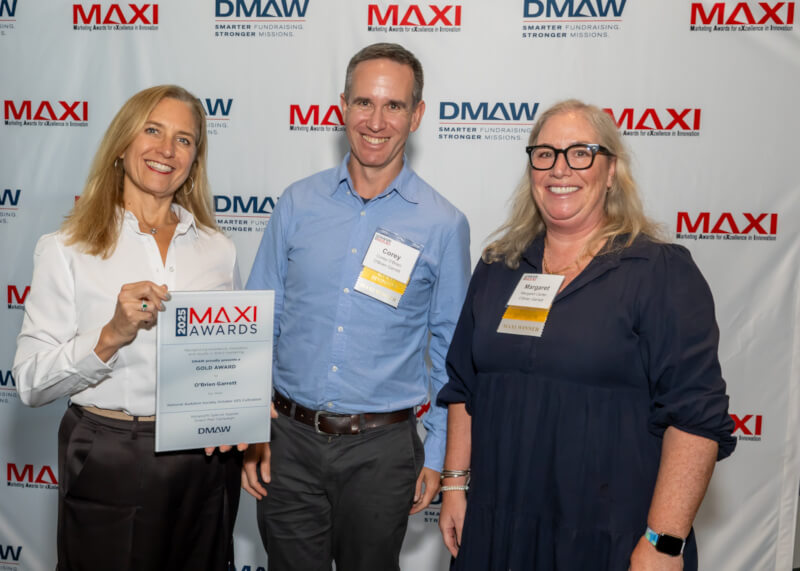
This year’s MAXI Gold winners showcase how thoughtful strategy, disciplined testing and mission-driven creativity can deliver exceptional results. From reimagining donor engagement and refining messaging to challenging conventional formats, each of these campaigns demonstrates what’s possible when insight meets execution.
National Audubon Society October GES Cultivation Campaign
The National Audubon Society focused on deepening relationships with its Great Egret Society donors through a refreshed cultivation approach. Centered around a redesigned donor impact report, the campaign reduced copy to highlight compelling photography while introducing new storytelling elements like “Stories From the Flock” and “Notes From the Field.” This more immersive and personal experience strengthened donor connection and engagement. The updated approach delivered strong results, including a 19% increase in average gift and a 39% increase in net revenue per donor, proving that thoughtful cultivation can drive meaningful financial impact.
Best Friends GivingTuesday Self-Mailer Campaign
Best Friends Animal Society tackled a unique GivingTuesday challenge by reaching donors who were not accessible through email. Using a bold and engaging self-mailer, the campaign challenged traditional assumptions about direct mail formats. The piece combined strong animal imagery, clear messaging and a compelling triple-match offer, while integrating a folded return envelope, QR code, and personalized URL for easy response. The results far exceeded expectations, generating $214,000 — more than 12 times the original goal — and demonstrating that creative execution can unlock high performance from overlooked audiences.
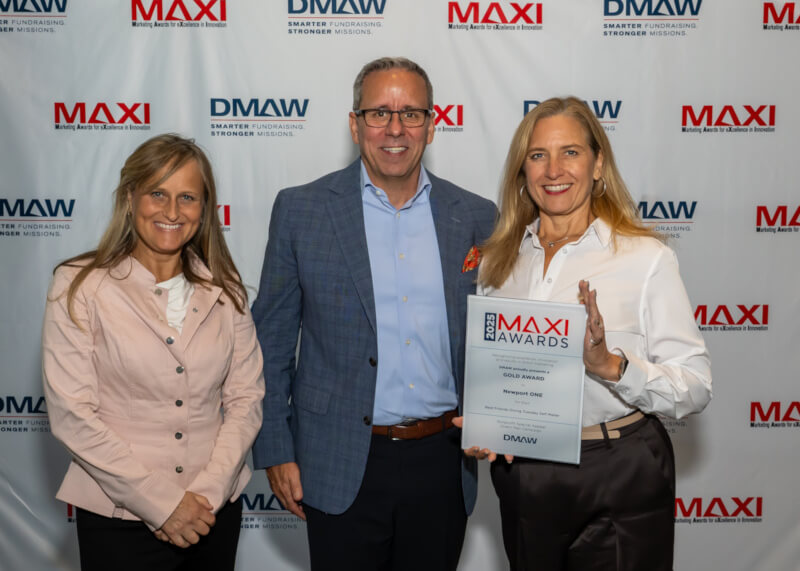
PETA’s Stop Animal Testing Challenge: Largest Match of the Year
PETA elevated its longstanding Stop Animal Testing Challenge by repositioning it as the largest match opportunity of the year to create urgency and drive stronger engagement. The campaign featured an emotional letter highlighting real cases of animal abuse, supported by authentic elements such as USDA excerpts and a redesigned outer envelope to emphasize the match. This strategic reframing delivered outstanding results, including a 32% increase in revenue, a 16% lift in response rate, and a 45% increase in net revenue, showing how even established campaigns can reach new levels through focused messaging and creative evolution.
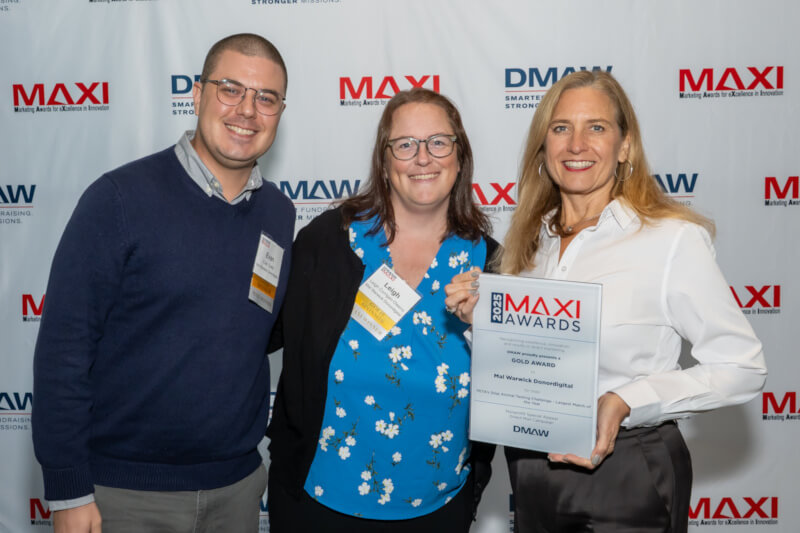
Why the One Perfect Donor Communication Isn’t Perfect (and How AI Can Help)
Picture, if you will, the perfect donor communication for your organization that the Copywriting Gods handed down on the ideal paper and pixels. Now target it to the perfect audience the Audience Gods selected themselves.
It will still fail for most people.
Because it’s just one communication that, no matter how cleverly created, cannot appeal to everyone.
You can go through the alphabet, letter by letter, and find a variable that profitably improves both audience selection and message customization: Advocacy history, behavior, connection to the cause, donation history, ethnicity, faith and so on.
Those are just the ones that work across organizations. There are areas of segmentation and customization specific to your sector or organization. Just as animal organizations find there are cat, dog, horse and other animal people, environmental organizations discover there are mountain, forest and ocean people.
So, there are many profitable opportunities for segmentation and customization of your donors to create perfect donor communications. No matter how good a marketer you are, you are not covering them all.
So the communication handed down on tablets, sent to the hand-picked audience? Maybe not so perfect after all.
The perfect donor communication isn’t one communication. It’s the right communication for that individual. That’s why we need artificial intelligence (AI) in the equation.
A More Perfect Communication With AI
As humans, we can hold about four variables in our head at a time. We do recency, frequency, and monetary value segmentation in part because we can remember three things at a time and four gets a little hazy.
That’s why we need models for who should receive what and when. Let’s say there are 40 different variables you can customize for in your communication. Let’s further say that each variable has only two possible values.
That gives you more than a trillion (1,099,511,627,776) possible combinations. Models can look at the totality of a person and, as they learn, better predict whether it’s worth the price of a stamp or an ad placement. They can do it better than any human.
And we can work together with AI systems to create the grist for the mill of customization. Let’s say your hypothesis is that your environmental organization has “forest people” who react best to forest imagery and messaging. An out-of-the-box large language model (LLM) like ChatGPT will confidently generate potential copy that talks to that audience, but it doesn’t know if it will work in market or even if your hypothesis is correct.
Consider instead testing with your classic 2x2 matrix — forest people and non-forest people each getting a mix of forest and non-forest copy. You might find that everyone prefers forest pictures, that the forest people don’t even prefer forest pictures, or that your hypothesis is correct.
When your machine learning system learns on your donors, messaging and variables, it can find what works and where those lines should be drawn.
As you do, your AI system can learn and expand your universe. If a customization makes your donor communication more profitable, it will fit into more people’s customized marketing mixes more profitably. People who were more marginal prospects will enter the mainstream. You can attract more donors with better messaging. You can keep more donors, which makes your donors more valuable. When donors are worth more, you can pay more to recruit them and recruit more donors more profitably. And on and on in a virtuous circle.
The nonprofit sector has been living the opposite of this circle, with falling retention rates and increasing acquisition costs. Our competition (which is literally every other way a person can spend money) does this through smarter selection and improved customization.
It’s time to catch up, with unique messaging that speaks to each person’s unique “why” for giving.
Where to Start
We’ve started with mid-level donors ($1,000 to $9,999) for a few reasons:
It’s a growing segment of revenue. From 2024 to 2025, clients at my firm, Moore, saw a 9.5% increase in mid-level revenue and a 7% increase in the number of donors. Further, by definition, these donors give more on average.
They are too numerous for the one-to-one attention given to major donors. As much as you want to invest more to get more from this audience, it’s not practical to hire mid-level gift officers in the same ratio as you would for major gift officers. Moore’s average mid-level client has over 13,000 mid-level donors on file, so an average of 100 mid-level gift officers just wouldn’t fly.
They are underserved by existing messaging. That leaves direct marketing as an ideal vehicle for these donors. However, a stamp gets the mail to my house just as quickly as to Bill Gates’ and, while it may cost a bit more to target him with digital ads, it certainly isn’t 1,000 times more expensive (although Bill has almost certainly invested heavily in ad blockers). That leaves the content of the message as the one area where you can most easily invest a little more to get a lot more in gifts.
So, an AI-based system that can recommend mid-level donors for investment and pre-write customized communications to them would be ideal. In essence, you’ll give your staff superpowers to send customized campaigns faster than a bullet and leap over data headaches in a single bound.
This will be an effective start, not an end, to how AI can transform how we do donor communications. We still need and want humans in the loop, providing the ethical guardrails for these systems and being creative to approach new audiences in new ways.
But AI can free us to do all these things and more, serving as our powerful tools to make our one-to-one communications compelling for old donors and new. That is the future — the perfect donor communication.
Nick Ellinger is chief brand officer of Moore, a data-driven constituent experience management company for nonprofits. He’s a 20-year nonprofit industry veteran with previous services at Mothers Against Drunk Driving and DonorVoice.
The Right Way to Approach Fundraising Benchmarks (and Why It Matters)

I talk about industry benchmarks, sector trends and donor behaviors a lot. And since 2024, one interaction in particular changed the way I talk about those things with fundraisers.
When I shared that the average nonprofit had seen a 127% increase in its recurring donor base between 2018 and 2022 (Figure 1), I expected excitement. I wanted people to see that number as an opportunity. But it had exactly the opposite effect. A fundraiser shared that the number made her feel “shame and guilt” because she hadn’t experienced the same growth at her organization.
If you’ve reacted the same way, it’s understandable — but it doesn’t need to be that way. Here are three guiding principles I use to talk about nonprofit benchmarks that will help you use them without making yourself miserable.
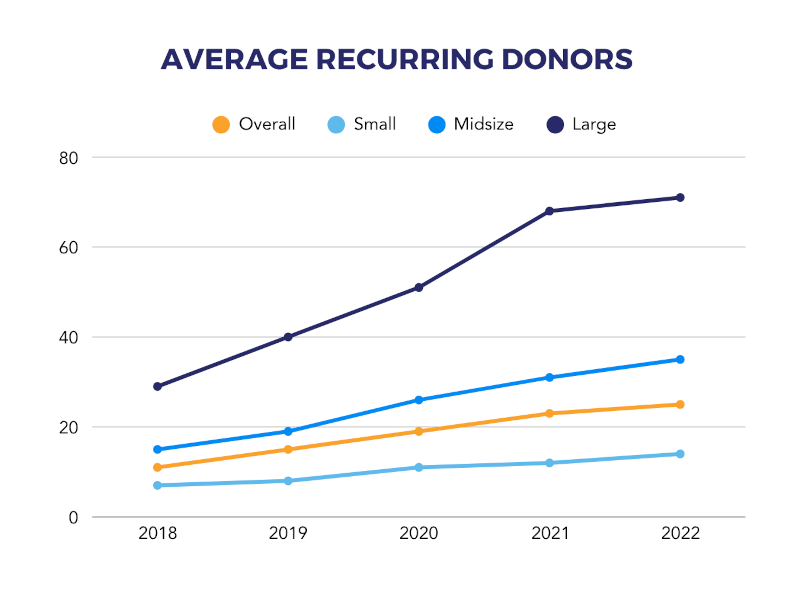
Credit: “The Recurring Donor Report: Data-Backed Insights for Sustainable Generosity,” Neon One
1 Benchmarks Are Nuanced
Data tells us stories, but those stories are really easy to lose when you distill data into benchmarks.
When you encounter a benchmark, trend or data point, resist the urge to take it at face value. Instead, sit with it for a minute. What does it actually mean? How can you reasonably apply it to your own activities?
Here’s an example. In a 2023 report on email benchmarks for nonprofits, we found that fundraising emails got the best results when they included about six links to a donation form (Figure 2).
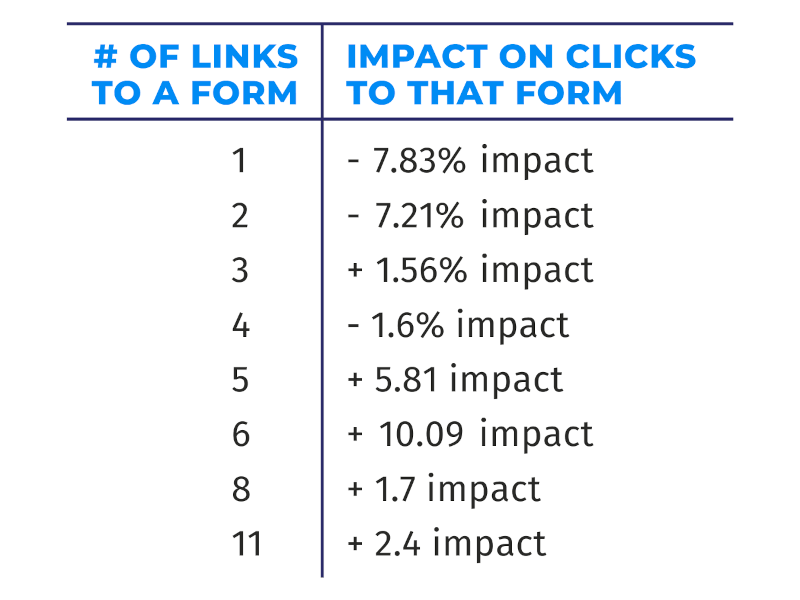
Credit: “The Recurring Donor Report: Data-Backed Insights for Sustainable Generosity,” Neon One
Does that mean you must include exactly six links to your donation form the next time you send an appeal? No, not necessarily.
What it does mean is that email appeals performed best when a link to a donation form was always easily within reach while someone read through the email. Long fundraising appeals may warrant more than six links, and shorter ones require fewer. But that nuance was lost in the benchmark.
Or consider the finding from our newest report that shows that the average first-time recurring donation was $84.38. Should you feel bad if your own nonprofit’s average first-time gift is lower than that?
No! Averages are tricky — a single large recurring gift can dramatically skew them. Understanding your median initial gift size (which, by the way, hovers around $30) will probably be much more useful to you.
It can take work and practice to internalize the fact that there’s a lot of nuance in numbers and statistics. Getting comfortable with interrogating the numbers and looking for the stories behind them will make industry benchmarks much more useful to you.
2 Benchmarks Are Guides, Not Rules
Take that fundraiser who was immediately overwhelmed by the finding that the average nonprofit grew its recurring donor base by 127%. She interpreted it as a rule — nonprofits were growing their recurring programs quickly. She wasn’t hitting that benchmark, and it made her feel terrible.
It’s an understandable reaction — it’s very easy to take benchmarks, trends or best practices very literally. But those figures are much more useful if you approach them as signposts that can guide your activities.
Not hitting that 127% growth benchmark didn’t mean the fundraiser was failing. Instead, it was signaling an opportunity for her to grow her recurring donor program.
Benchmarks should rarely be a cudgel that you use to beat yourself up. Instead, they should be a compass that helps you chart a course for your work.
3 Benchmarks Are Never More Valuable Than Your Own Performance
Understanding sector trends and benchmarks is important. But understanding your own trends and benchmarks is much more useful.
In “The Recurring Donor Report: Data-Backed Insights for Sustainable Generosity,” we found that the donor retention rate for that group was 79.1% in 2025. If your own recurring donor retention rate is lower, reading that statistic probably feels bad.
But remember, that’s less of an indictment and more of an indicator — that benchmark points to an area of opportunity. You have room to improve. And, if your 2025 retention rate was higher than your 2024 retention rate, you’re making good progress. Keep working on it.
This is not to downplay the significance of benchmarks and industry trends. Benchmarks should be aspirational. In most cases, you want to meet and exceed industry benchmarks. But steady improvement in your own performance is as important (if not more so!) than meeting them.
Don’t Let Benchmarks Get You Down
Data tells stories. But those stories usually require some thoughtful interpretation, especially after the data behind them has been boiled down into benchmarks.
Industry benchmarks should help you identify where you’re doing well and where you can improve. A benchmark is simply a signpost showing you where to go, and your own data lets you know if you’re on track. If you don’t like the direction you’re moving, you can always dig into what you want to change.
Next time you encounter a benchmark that makes your stomach drop, don’t panic. You’re not in trouble — you’ve just learned about a new opportunity to grow.
Abby Jarvis is a researcher, writer, and speaker at Neon One. Her 13 years in the nonprofit technology industry have been dedicated to understanding how and why donors support their favorite causes, studying donor trends and behavior, and sharing practical tactics nonprofits can use to build successful fundraising programs.
Building Loyalty, Maximizing Impact: DMAW’s Sustainer Day 2026 Delivers
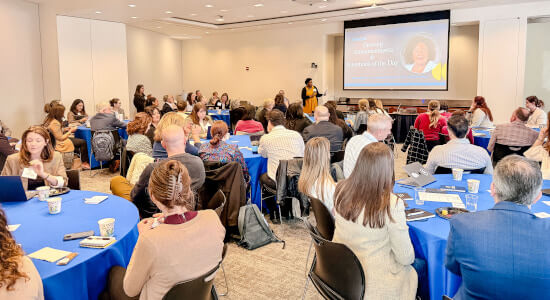
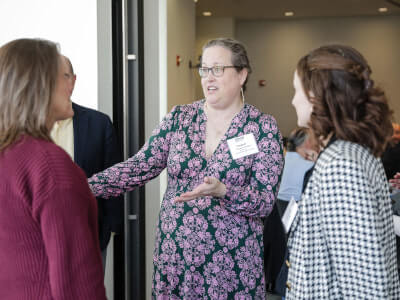
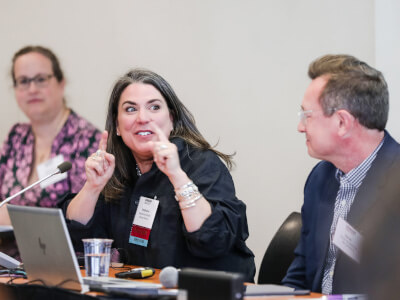
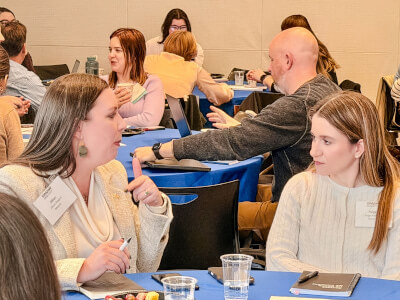
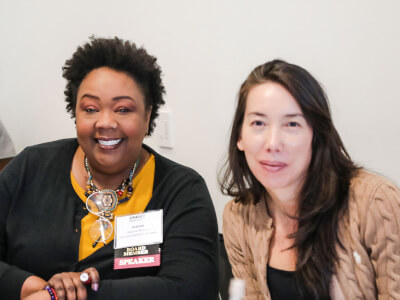
DMAW’s Sustainer Day 2026 brought members together for a candid dive into the realities of recurring giving. Sessions covered data and retention challenges, multichannel acquisition, and building integrated sustainer systems — plus a lunchtime keynote from Ben Smithee of NextAfter unpacking findings from the 2025 Recurring Giving Benchmark Study across 140 nonprofit programs. Peers connected, compared notes, and left with ideas ready to use.



Our industry’s next generation of leaders are already making an impact! Learn more and join them at
dmaw.org/ydmaw.
Inside YDMAW Mentorship: Building More Meaningful Connections



Mentorship plays a critical role in shaping careers in direct marketing by offering space to learn, ask questions and build relationships that extend beyond day-to-day work. For YDMAW, the Mentorship Program continues to be a key way to support emerging and growing professionals across the industry.
This year, the program builds on last year’s foundation with a more structured, intentional approach, designed to create stronger alignment between mentors and mentees and foster more meaningful conversations from the start.
A More Thoughtful Approach to Group Matching
One of the defining features of this year’s program is the emphasis on how groups are formed.
Rather than broader, more general groupings, participants are now placed into smaller, more personalized cohorts based on:
- Career stage and experience level, helping ensure conversations are relevant to where participants are in their professional journey.
- Affinities, such as being a working parent.
- Skill interests and growth areas, from public speaking to career planning.
- Mentor expertise aligned to those focus areas, ensuring each group benefits from guidance that directly reflects the topics and skills they’re looking to develop.
This approach is intended to create a shared foundation within each group, making it easier for participants to connect, engage, and dive into meaningful discussions early on.
Smaller Groups, Stronger Connections
With more intimate group sizes, the program creates space for every participant to actively engage. These smaller settings are designed to encourage open dialogue and participation, as well as allow mentors to provide more tailored guidance.
In addition to learning from experienced leaders, mentees are also able to build relationships with others navigating similar challenges and career moments.
Grounded in Real Experiences
By capturing input from participants upfront, YDMAW shaped group dynamics and discussion areas around what professionals are actively navigating, whether that’s stepping into leadership, building confidence, refining communication skills, or expanding technical expertise.
What Sets This Year Apart
While last year’s program was successful, this year’s structure places greater emphasis on intentionality and alignment.
From more tailored matching to smaller group dynamics, the goal is to create an environment where participants feel:
- More comfortable contributing
- More connected to their group
- More supported in their individual growth
Looking Ahead
As the program unfolds, YDMAW looks forward to continuing to learn and refine the experience based on participant feedback.
Mentorship is not one-size-fits-all and this year’s approach reflects a commitment to building a program that meets professionals where they are, while helping them grow into what’s next.
If you’re interested in becoming a mentor or mentee, keep an eye out for our fall cohort and learn more here:
Katie Tamaro is the digital fundraising manager at Citymeals. Rose Richtmyre is an account executive at K2D Strategies. Shelby Steere is the account director at Further Digital.
MEMBER SPOTLIGHT
Senior Director of Development Strategy and Operations
The American Kidney Fund
mking@kidneyfund.org
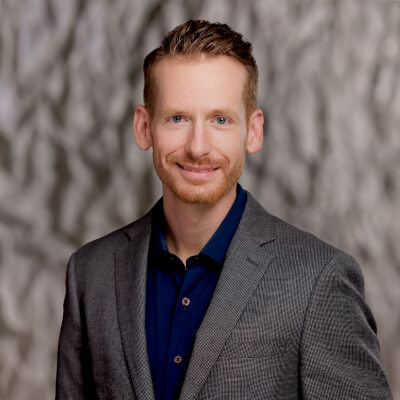
Myles King has built his career on a simple premise: Find what isn’t working and fix it — even imperfectly at first. That instinct has carried him from membership strategy at The Kennedy Center to his current role as senior director of development strategy and operations at the American Kidney Fund, with five MAXI Award-winning campaigns and an Anthem Award along the way.
For Myles, though, the through line was never just problem-solving for its own sake. It was always about what the work produces at the other end.
“I love the process of going from data and rows in spreadsheets to segmented, custom communications and strategies that help connect millions of people with the nonprofit organizations and causes they love,” he said.
A University of Virginia graduate, Myles spent the bulk of his career at the Kennedy Center, taking on roles spanning digital fundraising, donor communications, board relations, and fundraising operations before moving to the American Kidney Fund. He has been an active presence in the Direct Marketing Association of Washington (DMAW) community as well — speaking at Bridge Conference sessions and Multi-Channel MiniCon and serving on the DMAW Membership Committee.
What advice would you offer a novice who wants to move up in direct marketing?
Ask questions. We all come into this field with different levels of knowledge, and things are changing all the time. Staying a step ahead and gaining new knowledge has been key to building my career. A lot of people look at direct marketing as a traditional skill set — but of all the areas I have explored, direct marketing is the quickest to adapt to new technologies and test new ideas.
What is the most helpful step you took to advance your direct marketing career?
Learning how to identify a problem, and figuring out a way — even if imperfect at first — to address it. Nearly every major advancement I’ve had in my career has been because I recognized something that wasn’t working, and a way to make it better.
Describe yourself in three words.
Curious. Intentional. Tired.
Describe your life in six words.
An unexpected but usually fun adventure.
QUICK TAKES
 FILM: Two niche picks – “Moulin Rouge” and “Black Swan”
 LEISURE INTERESTS: Running, playing with my dog, genealogy, fashion, Disney/theme parks
 MUSIC: A lot of Miley Cyrus lately.
 QUOTE: “Be who you are and say what you feel, because those who mind don’t matter and those who matter don’t mind.”
Direct Impact is the member exclusive magazine from the DMAW, login to read the full issue and access the archives. Not a member yet? Join today to get every issue and more!
