
September/October 2026 Vol. 64 No. 5
A New Era of Email Lead Gen: Digital Co-Ops

Rising ad costs, shrinking grassroots donor pools and increased competition in inboxes have forced nonprofits to rethink how they grow. Email list building once relied on Meta and Google, but those platforms now offer more restricted targeting at higher costs. Only about 15% of digital ad budgets go toward lead generation, according to the latest M+R Benchmarks report.
Nonprofits still need new supporters, but they lack proven sources for finding them. Digital co-ops are increasingly filling that gap.What Are Digital Co-Ops?
Digital co-ops are databases that combine donor and behavioral insights from dozens to hundreds of participating nonprofits. Inputs from co-op members enable co-ops to model the audiences most likely to engage with a specific cause. It’s an idea rooted in direct mail co-ops, reimagined for digital channels. Members contribute data and, in return, gain access to prospects who are known to be actively engaging on other email lists and donating to similar causes.
When used correctly, co-ops can deliver names at a fraction of the cost of paid social or display acquisition — sometimes as low as $0.40 per lead versus $3 to $15 through Meta and Google Performance Max.
Getting Started
Many fundraisers hesitate to engage because co-ops aren’t built on traditional opt-in tactics. While this is not the forum for legal advice, many leading nonprofits have been advised that fixed-cost email acquisition complies with applicable laws. That said, each organization should evaluate its donor communications standards, privacy policy and CRM platform terms and gauge whether they go beyond legal requirements. Your privacy policy may need to be revised before participation.
If you’ve decided digital co-ops are a good fit for your organization, you’ll enter a landscape filled with multiple vendors, each with nuances in pricing, reporting, membership and model.
I’d suggest vetting two areas when choosing which vendor you start with:
- The co-op’s membership in your issue area. While a co-op should not disclose individual members, it should be able to indicate whether others in your vertical are contributing data.
- How and what data the co-op ingests. Some co-ops accept only flat-file member contributions, some only API contributions, and some both. I highly recommend API contributions. They strengthen data security (fewer files exchanged), improve the model (more real-time data) and save your team time.

Tips for Success
Co-ops are not plug-and-play. Success requires pairing them with performance-driven content, strong email deliverability and solid evaluation.
For Defenders of Wildlife, a content and targeting audit drove a new messaging approach and refined audience queries that were implemented in parallel with early investments in digital co-ops. After the audit, the organization renewed its focus on political threats and breaking news, and narrowed its email audience to recent openers and clickers.
Regular cohorts of co-op prospects also created opportunities to test the welcome series. Defenders of Wildlife initially varied treatment, sending prospects either the full series or one message. The nonprofit later tested the standard four-email series against one email across several buys. Statistically significant results favored the one email approach.
The most important key to success in Defenders of Wildlife’s use of digital co-ops has been its evaluation infrastructure. Three partners oversee performance: Co-op providers deliver real-time reporting, the fundraising agency compares return on investment and the analytics agency assesses retention. Comprehensive reporting matters because effectiveness can diminish as an organization goes deeper into the model.
A Case Study for Scale
Defenders of Wildlife demonstrates both the immediate impact and sustainable growth digital co-ops can offer. Defenders of Wildlife’s initial digital co-op investments were with MissionWired’s The Digital Co-op. After three years and significant investment, the results speak for themselves:
- 215% overall return on investment over the past three years.
- 103 days as median time for donors to give their first gift.
- 20% of converting donors have made a gift of $100 or more.
These figures demonstrate the durability of co-op investments, but Defenders of Wildlife became a founding member in SimioCloud’s new digital co-op in February. There were concerns that a new co-op would struggle, given how far Defenders of Wildlife was in the model for a competing co-op, or that returns would diminish for existing co-op investments. But investments in MissionWired’s co-op have remained steady, and SimioCloud results have been impressive out of the gate:
- $5.08 raised for every $1 spent in the first two deliveries.
- Eight days for the first delivery of prospect audiences to break even.
- 300% return in three months for the second deliver.
After three years in MissionWired’s co-op and as a founding member of SimioCloud’s co-op, Defenders of Wildlife is one of the early proof points in this growing space that a nonprofit can invest in multiple digital co-ops at scale.
Having the Conversation
Despite their promise, digital co-ops remain under-discussed and taboo in some corners of the industry. Many fundraisers hesitate to engage because co-ops aren’t built on traditional opt-in tactics, even though they are typically viewed as legally compliant and widely used by leading nonprofits. There are important ethical discussions the sector needs to have about fixed-cost email acquisition tactics like digital co-ops, but those should happen holistically alongside the impact these results can have on missions. Ultimately, people will only engage with and invest in missions that align with their interests, and these results demonstrate that digital co-ops have been very effective at identifying mission-aligned supporters.
Bringing this conversation into the open — how the data exchange works, how privacy is protected and how ethical marketing can coexist with good data science — is essential for the sector’s growth.
Ben Deutsch is vice president of digital marketing at ABD Direct, a direct response fundraising agency for nonprofits. He has built or scaled several $5-million-plus annual digital fundraising programs and serves on the DMAW List Standards and Data Privacy Committee.
PRESIDENT’S PERSPECTIVE
Weathering the Storm, Building Strength Together
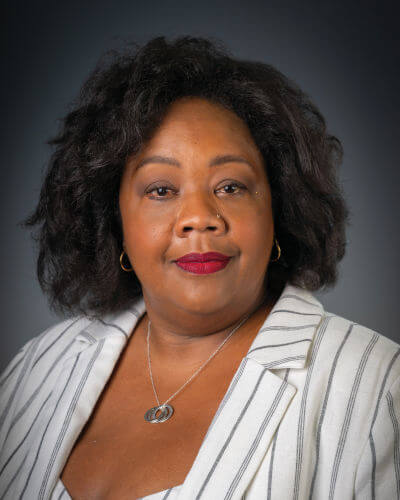
I hope you have come away from the 21st annual Bridge to Integrated Marketing and Fundraising Conference as energized as I did. With the theme “Stronger Than the Moment,” the jointly held AFP-DC and DMAW event was truly inspiring. And what strength we saw on display: more than 2,400 attendees, along with the largest number of exhibitors in the Solutions Showcase in Bridge history. My heartfelt thanks to all of you who were able to make it.
Speaking of thank you, we owe you our deepest appreciation to conference co-chairs — Chris Weiland, vice president and creative director of RKD Group, and Doug Trout, CEO of DriWaterstone. We send additional appreciation to my counterpart, Sarah Miller, AFP-DC president.
Our opening keynote, Americus Reed II, gave an energetic talk on building both trust with donors and a brand that you believe in. He drew throughlines from the commercial sector to the nonprofit sector with his signature slogan, “Catch this!” while challenging us all to rethink how we perceive ourselves and the people who support us.
The conference closed on a quieter note with Kishshana Palmer counseling us on how to weather the storm. At the core of her discourse, she encouraged us to face down that storm: Look at it and name it, decide how you and your team will stand in it, say what’s true, and do what you said you would. This is a shortened version, of course, but really — don’t let yourself get exhausted.
So, as we stand here weathering the storm, I want to invite you to step away from your day-to-day and periodically join us for our upcoming events. One of DMAW’s strengths remains the opportunities to learn and to grow. Upcoming events include the Boston Nonprofit Summit on Sept. 23; YDMAW Speed Networking on Oct. 1; the MAXI Awards Luncheon on Oct. 2; our Fall Member Meet Up on Oct. 8; the Multi-Channel Innovation Summit on Oct 22; and last, but by no means least, the Best of Direct Awards Ceremony and Holiday Party on Dec. 3.
I want to leave you with these closing thoughts on being “stronger than the moment”. As an industry, we are constantly standing in that storm, but we are also very good at holding each other up. We come together, exchange ideas, use each other as sounding boards and collaborate effectively. I can’t wait to see what we can continue to build together!
Joanne Wilson jwilson@humaneworld.org
Committee Spotlight
Building Belonging: DMAW’s DEI Committee

DMAW’s DEI Committee has been taking a fresh look at how it can best contribute to a more diverse, equitable and inclusive DMAW community.
Rather than trying to tackle everything at once, our goal has been to identify a set of priorities where the committee can make meaningful progress, while recognizing that DEI touches many more areas of DMAW’s work.
This year we have focused on three areas: better understanding our membership, bringing a DEI perspective to work happening across DMAW and identifying practical ways to make DMAW events and experiences more accessible.
The committee is cochaired by Katie Tamaro and me, and includes members Amy Sukol, Cheryl Lovinsky, Jade Swanson, Katy Jordan, Kristina Faragher and Mary Getz. With both board and non-board members, we can bring different professional backgrounds, experiences and perspectives to the work.
Understanding Our Membership
An important part of strengthening DEI within DMAW is having a clearer understanding of our community. One area the committee is exploring is how DMAW captures demographic information about its members.
Better information can give us a clearer picture of who is represented in our membership, help identify gaps and provide a stronger foundation for future conversations and priorities. It can help us better understand the DMAW community rather than make assumptions about who our members are.
Bringing a DEI Lens Across DMAW
DEI shouldn’t exist as a separate initiative. It should be woven into the work DMAW is already doing.
That means looking for opportunities to partner with other committees and serve as a resource. For example, we can help broaden the voices represented in educational programming, elevate emerging professionals and discover any perspectives that maybe be missing.
The DEI Committee can bring another lens to those conversations, ask questions that might not otherwise be asked and help identify opportunities. The strongest results will come from integrating that perspective throughout DMAW.
Making DMAW More Accessible
Accessibility is another area where thoughtful planning can make a meaningful difference in who is able to fully participate in DMAW programs and events.
The committee has discussed developing practical accessibility guidelines that encourage organizers and presenters to think more broadly about how people experience an event — including how information is heard and understood, how people are invited to participate and whether our language or practices unintentionally create barriers.
That can translate into practices as straightforward as consistently using microphones so everyone can hear, or encouraging speakers to use inclusive language that doesn’t make assumptions about an attendee’s physical abilities or how they are able to participate. These small choices together reflect a larger commitment to designing programs with a wider range of participants in mind. The goal is to make accessibility part of the planning process from the beginning, rather than after a barrier arises.
Moving Forward
These three priorities don’t represent everything the committee may address in the future, but gave us a focused place to start and make tangible progress. And this work isn’t limited to board members. We welcome DMAW members to bring their experiences, ideas and perspectives to the committee. Scan the QR code to get involved or learn more!
Ann Crowley is a DMAW board member and DEI Committee cochair.
How I Got Here
DMAW members reflect on their starts that shaped their career paths to today
While direct marketing and nonprofit management are now growing fields of study at colleges and universities, many of us took meandering routes to get here. Over the years, I have heard countless stories from DMAW members whose areas of study have been vast. Our newest Direct Impact column, “How I Got Here,” showcases our members’ backgrounds. Enjoy the next installment, featuring Maria Fisher and Kate Hollandsworth — and contact us at comms@dmaw.org if you’d like to be featured.

Campaign Manager for Membership
The Nature Conservancy
My career at The Nature Conservancy began more than 31 years ago, and from the start, my work has been centered on building meaningful connections between people and the conservation work they support. I began in membership through member care, serving on the front lines of donor engagement and learning firsthand what motivates and inspires our supporters.
From there, I managed The Nature Conservancy’s workplace giving and matching gifts program, serving as the organization’s representative to EarthShare. I later moved into annual giving and donor relations within development, focusing on donor stewardship and engagement. These roles allowed me to work closely with teams across the organization to ensure donors received timely, relevant information and a strong sense of connection to the impact of their giving — particularly among mid-level and high value donors.
Today, I am back in membership as a campaign manager, where I oversee the execution of direct response strategies, support project management triage, and continue to handle escalated member inquiries. My current work also includes managing donor-advised fund (DAF) and IRA giving, as well as membership’s hybrid solicitation program for managed donors. Throughout my career, I’ve been proud to influence year-over-year growth in mid-level donors, now numbering more than 32,000 — and more recently, significant growth in DAF and IRA giving.
Beyond my role at TNC, I’m passionate about supporting the nonprofit fundraising community. I enjoy supporting the nonprofit industry by mentoring early career professionals and presenting at industry conferences. Based in Arlington, Virginia, I’m a D.C. native, a U.S. Air Force veteran, and grateful to continue a career dedicated to helping people and nature thrive.

Senior Director of Direct Marketing
Paralyzed Veterans of America
When people ask how I ended up serving on the DMAW board and as senior director of direct marketing at Paralyzed Veterans of America (PVA), my answer is simple: I started in nonprofit donor services and learned by doing.
Education and experience became my greatest teachers. As the fundraising landscape evolved, so did my approach. I learned to balance data with creativity, strategy with empathy and innovation with proven fundraising fundamentals. Those lessons have guided my growth from managing direct mail programs to leading integrated direct marketing strategies for one of the nation’s largest veteran service organizations.
One of the greatest advantages of my journey has been the opportunity to build the majority of my career within the same organization. Each new role expanded my perspective and strengthened my understanding of fundraising and organizational leadership. That combination of formal learning and hands-on experience gave me the confidence to grow in increasingly senior leadership positions.
I didn’t begin my career with a perfectly mapped-out plan or the expectation that I would one day help shape the future of our industry. Instead, I embraced every opportunity to learn. Each new responsibility and challenge became a chance to build my knowledge and sharpen my skills. Along the way, I discovered that successful fundraising is about much more than generating revenue — it’s about creating meaningful connections with donors and advancing missions that change lives.
Looking back, my journey wasn’t defined by a single breakthrough moment. It was shaped by curiosity, persistence and a commitment to growing with every experience. Those same principles continue to guide my work today and inspire me to help move our profession forward
2026 Bridge Conference: Stronger Than The Moment
The Bridge to Integrated Marketeting & Fundraising Conference, in its 21st year, brought together nonprofit professionals for three busy days of learning, conversation and connection. Under the theme “Stronger Than the Moment,” attendees traded practical ideas, explored the Solutions Showcase and reconnected with peers who understand both the importance and reward of the work. From pre-conference events to the closing keynote, Bridge made room for new perspectives and partnerships — and plenty of familiar faces.
Photo Credit: Kelly Wilkinson Photography
(scroll horizontally to see all the images)


How Oceana Built a High-Performing SMS Program

In early 2025, Oceana made the decision to invest in its SMS marketing program. The organization had the ability to message subscribers, but not a lot else and no real cohesive strategy for how to use the channel effectively.
Today, Oceana’s list has grown by more than 100%, and SMS is one of its most effective channels, with a life all its own.
With Banter, Oceana made a plan to build a program for the longterm, with the goals of deepening supporters’ relationships with the organization’s mission, creating mobile-first strategies and growing the SMS channel.
We worked together on identifying new tools that met Oceana’s needs, building integrations to richly segment and experiment, as well as internal capacity to support the organization’s vision.
We developed an SMS persona, Mira (Sanskrit for “ocean”), and set about making her someone supporters want to hear from. She makes ocean science fun, explains complex issues with ease, surprises and delights. Mira responds to supporters’ questions, asks them questions about themselves and shares interesting content. She doesn’t scream that the sky is falling or relentlessly ask for donations.
Mira guides everything Oceana does via SMS, and everything is designed to be mobile-first. Oceana treats SMS as its own medium, with its own best practices: Messages are short, punchy and personal, with one clear ask and a fun, conversational tone. Mira, not Oceana, texts with supporters.
Mira gives supporters a full view into the scope of Oceana. The idea is that having a consistent contact who asks them for donations or to call their senators’ offices — while also sending fun, engaging content, discount codes for Oceana merchandise, ocean-themed playlists and beautiful images — increases activity and decreases opt-outs.
This approach has borne real fruit for Oceana in the past year: And the results from this approach have borne real fruit for Oceana in the past year:
- An increase in list size from about 20,000 to more than 50,000.
- A 10% click rate on Oceana advocacy actions, generating tens of thousands of additional comments and calls to legislators.
- A 1% click rate on direct fundraising asks and a 2.5% click rate on Oceana store links.
- An overall 0.5% opt-out rate — less than 1% of subscribers have opted out, with most doing so immediately, indicating a distaste for the channel overall rather than any particular message received.
The Banter approach, combined with Oceana’s strong organizational culture of customer service, has led to a highly responsive, deeply engaged program in which supporters feel valued, recognized and respected rather than treated as ATMs.
We’ve experimented with unique and interesting messages and cross-channel promotions (SMS and Instagram, SMS and email, etc.); collected valuable data, such as birthdates through marine mammal horoscopes; and used puns and wordplay — all thanks to being able to speak as Mira, rather than as Oceana.
Mira also responds to most questions and comments, requiring the whole team to pitch in and monitor the inbox, get answers and coordinate across departments when necessary. Every reply is an opportunity to deepen the relationship, telling supporters that you appreciate their response and respect their inbox. SMS isn’t a series of discrete messages. It’s an ongoing chain and requires you to put in quality in order to get results.
Your supporters want to hear from you. They want to hear how they’re helping you make progress on something they care about. They want to be valued and respected. SMS offers the perfect channel and opportunity to do all of those things, while still raising money, driving action and hitting your goals.

What are the biggest lessons Oceana learned with Banter after one year?
- We design for the channel. SMS content is written from scratch, not repurposed from other places.
- Mira’s voice is the program’s biggest asset. Consistency in tone drives trust, responses and action.
- Short, fun and personal content outperforms long, institutional messaging.
- SMS outperforms other channels in rapid-response moments, because it does not rely on algorithms to deliver timely content and can draw on the trust Mira has built when she says something is urgent.
- The advocacy-to-fundraising pivot is natural and credible when you’ve built a tight message arc.
- Your welcome series matters. It sets the tone and expectations for long-term engagement.
- Reply rates are a strong signal of success, and two-way conversations are a built-in feedback loop.
Beyond the Buzzwords: Real Talk in Modern Fundraising

At this year’s Bridge Conference, Collin Ward, chief information officer and senior vice president at Newport ONE, Mary Getz, principal and founder at MESG Marketing, and I set out to do something rare in fundraising conference sessions: have real talk about modern fundraising.
We encouraged industry colleagues to ask us anything via an anonymous form, but were a little nervous to be so vulnerable. And our moderator, Chris Brooks, vice president of membership and direct response at the League of Conservation Voters, did not hold back when pressing us for answers.
Here are four questions that generated some of the liveliest discussion in our session.
1. Testing AI-Generated Asks
One question cut to the heart of today’s hype cycle: Can we trust AI-generated ask strings and fundraising tools built into donation platforms?
In one example, AI-generated ask strings used in a series of emails lost decisively to a static ask strategy. Open rates were nearly identical, but the AI ask-string version generated 76% less revenue and higher unsubscribe rates. Same audience and same timing, but very different results.
Yet the same AI-driven approach performed dramatically better in paid acquisition advertising, producing lower click costs, higher average gifts and more than double the revenue.
The lesson isn’t whether AI works or not, but that every tool deserves a control group. Trust is not a platform setting. It’s a test result.
2. Fundraising Without a Crisis
Few fundraising beliefs are more persistent than the idea that donors won’t give unless there’s a matching gift, an emergency or some dramatic external event.
In a rare moment, our panelists agreed it is worth fundraising even without a match or crisis. A match is a fundraising tactic, not a reason to ask. Donors give because they care about impact. A compelling need, clear deadline and specific outcome can be just as motivating as a match offer.
In fact, going quiet while waiting for the perfect fundraising moment often creates a much bigger problem. The donors you don’t engage today become the lapsed donors you’ll spend even more money trying to reactivate next year.
Fundraisers sometimes confuse permission with urgency, waiting for an external event to feel comfortable asking. But if your mission matters, you already have permission.
3. Beyond Single-Channel ROI
As for common assumptions nonprofits that don’t work anymore, we must stop evaluating acquisition programs as if donors belong to a single channel.
Donors don’t think of themselves as direct mail or digital donors. That’s language fundraisers use. They simply interact with organizations wherever and whenever it is most convenient for them.
That’s why judging a direct mail acquisition effort exclusively on reply-device performance misses a huge part of the picture. A donor who receives a mailing and makes a gift online is still responding to the mail. That new donor, now classified as “online,” may later become a sustainer through digital channels. But the mail was what got that prospect’s attention in the first place.
Without acquisition matchbacks, organizations risk cutting successful acquisition sources because donors aren’t being acquired through expected channels. The most successful acquisition programs measure net cost per donor holistically.
It’s not direct mail acquisition. It’s donor acquisition that happened to start in the mailbox.
4. Email Frequency
This might be the most popular fundraising question of all time: “Donors don’t like emails, so can we send fewer and raise the same amount?”
Maybe. But the data often tells a more complicated story.
One organization reduced its year-end email volume from 17 to 14 messages and saw revenue immediately fall from roughly $492,000 to $219,000. The following year, it returned to 17 emails and revenue rebounded to nearly $497,000.
Did three emails really make that much difference? In this case, yes. However, in the rebounding year, the organization didn’t send every donor every email.
The takeaway is that rather than reducing volume across the board, send the right messages to the right donors. Frequency is usually not the real issue — relevance is. Email cadence is an audience-first decision.
Tiffany Reed is vice president of Mal Warwick DonorDigital.
Join Tiffany, Colin and Mary for their session at the inaugural Multichannel Innovation Summit on Oct. 22!
MAXI Corner: Gold Award Spotlights
The 2026 MAXI Award winners show how thoughtful campaign design can strengthen donor relationships and produce measurable results. From personalized direct mail to extended GivingTuesday engagement and coordinated digital outreach, each campaign matched its approach to its audience, mission and fundraising goals.
Carpenter’s Shelter Opens Doors to Donor Engagement
When Carpenter’s Shelter expanded its services by taking over the only other emergency shelter in Alexandria, Virginia, the organization faced a growing challenge: serving more neighbors experiencing homelessness without a proportional increase in resources. Its response was “Let’s Open Doors,” a direct mail campaign designed to strengthen donor relationships through personalization and authentic storytelling.
Personalized giving requests reflected donors’ prior giving, while handwritten notes and a former resident’s story made the case for support tangible. The envelope, lift note and messaging reinforced the campaign’s credibility and call to action.
The strategy paid off. Carpenter’s Shelter reported a 26.46% increase in gifts, an 18.95% increase in response rate and a higher average gift, while improving fundraising efficiency. The campaign shows how donor insight and a well-told story can make direct mail more relevant — and more effective.

Easterseals Hawaii Rebuilds Donor Momentum Through Multichannel Giving
After several years without a consistent fundraising campaign, Easterseals Hawaii set out to reconnect with donors through an integrated GivingTuesday effort.
With many supporter records outdated, the organization embraced a multichannel strategy that combined email, text messaging, social media, digital advertising and a refreshed campaign website. Localized messaging emphasized its work with children and adults with disabilities across the islands. Audience segmentation symbolic giving asks helped reengage lapsed supporters and attract new donors.
Easterseals Hawaii surpassed its fundraising goal, reactivated 50 lapsed donors, increased revenue by 109%, generated 343% more gifts, and demonstrated strong returns from both digital advertising and text messaging. The campaign underscores how a coordinated, community-centered approach can help an organization rebuild its fundraising momentum.
JSSA Extends the Impact of GivingTuesday
For many organizations, GivingTuesday lasts one day. JSSA took a longer view. Its “GivingTuesday & 18 Days of Giving Campaign” cultivated donors before GivingTuesday and sustained engagement through year-end. Gratitude-focused communications warmed supporters before fundraising appeals began. Then afterward, JSSA launched its themed series, using consistent messaging, compelling stories and timely updates to maintain momentum.
Strategic email sequencing and dedicated landing pages created a continuous donor journey rather than a single fundraising push. The effort increased year-over-year revenue and average gift size while generating strong response rates. JSSA’s campaign demonstrates how organizations can use GivingTuesday as the start of a broader year-end conversation.


Our industry’s next generation of leaders are already making an impact! Learn more and join them at
dmaw.org/ydmaw.
Filling the Tipping Bucket: Effective Attribution

One of the first lessons young professionals learn in direct marketing is that success rarely comes from dramatic changes. More often, it comes from small, disciplined improvements that compound over time.
A recent fundraising campaign offered a strong example of this principle through optimizing the ask string, presented to donors in a direct mail package. The optimization was done via a co-op partner with the goal being to generate more donors for the nonprofit.
At first glance, changing suggested giving amounts may seem minor compared to redesigning a campaign or rewriting an entire fundraising appeal. But in direct response marketing, even subtle adjustments can influence donor behavior in measurable ways.
The campaign compared a traditional control package against a version that used optimized ask amounts tailored to encourage stronger participation. The co-op partner identified donors likely to give a slightly lower amount based on their giving history within the database. The results reinforced an important reality for marketers: Improving response rates can be just as valuable as increasing average order size or donation value.
The optimized campaign generated a higher response rate, meaning more people chose to give. While the average donation was lower, the campaign ultimately operated more efficiently overall. In direct marketing, that balance matters. A campaign that motivates more people to respond can create stronger long-term value, especially in donor acquisition programs where future retention and lifetime giving are critical.l
This is one of the most misunderstood concepts among newer marketers. Many people focus immediately on revenue totals or average gift size because those numbers appear more impressive on the surface. But experienced direct marketers know that efficiency metrics often tell the real story.
Metrics like response rate, revenue per thousand mailed and cost per dollar raised provide a deeper understanding of campaign performance. They reveal whether a marketing strategy is scalable, sustainable and capable of improving over time.
The campaign also demonstrated the power of incremental gains. The increase in response rate was not massive in percentage terms, but direct marketing operates at scale. When campaigns reach tens of thousands or even a million households, small lifts can translate into substantial financial impact.
This is why testing culture is so important in fundraising and direct response environments. Successful organizations rarely assume they already know the best approach. Instead, they continuously experiment with variables such as donation ask amounts, personalization, copy tone, audience segmentation, package design, timing and frequency.
Each test may only improve results slightly, but over time those gains compound into significant operational advantages.
For young professionals entering the field, this mindset is essential. Direct marketing is both creative and analytical. Strong campaigns require persuasive storytelling, but they also depend on disciplined measurement and optimization.
Another important takeaway from this campaign is the role of donor psychology. Donors respond differently depending on how choices are presented to them. An ask amount that feels attainable can encourage participation, while one that feels too ambitious may discourage action entirely.
Understanding that balance is part art and part science. It requires marketers to think carefully about audience behavior rather than relying solely on instinct.
The broader lesson is that effective direct marketing is rarely about finding one perfect idea. More often, success comes from building systems that allow continuous learning and improvement.
Marketers sometimes expect breakthroughs to come from bold redesigns or highly visible creative changes. In reality, some of the most valuable improvements happen quietly in the background through testing frameworks, data analysis and optimization strategies that steadily improve efficiency over time.
That discipline is what separates strong direct marketing programs from average ones.
In today’s environment, where acquisition costs continue to rise and audience attention is increasingly fragmented, organizations cannot afford to ignore small performance improvements. Every percentage point matters. Every optimization matters.
And sometimes, changing a few numbers on a donation form can produce insights that reshape an entire fundraising strategy.
Apryl Castelluccio is the executive vice president of operations at Key Acquisition Partners. Contact Apryl at acastelluccio@keyacquisition.com.
MEMBER SPOTLIGHT

Founder, Chief Marketing and Growth Officer
The Small Biz CMO
franklin@thesmallbizcmo.com
A new DMAW member, Franklin Parrish brings a perspective shaped by design, entrepreneurship, hospitality and marketing. A resident of Riverdale Park, Maryland, he began his career in design before starting his own business.
“I started out in design and went into business for myself during the Great Recession,” the founder and chief marketing and growth officer of The Small Biz CMO, said. “I soon figured out that design without strategy is just decoration, so I became a student of marketing.”
Franklin’s academic background also reflects the wide-ranging interests he brings to his work. He holds a bachelor’s degree in political science from the University of Virginia and a master’s degree in management information systems technologies from Wilmington University in Delaware. Before moving fully into marketing, he also spent several years working in hospitality.
Marketing appeals to Franklin because it offers a way to study — and influence — human behavior. That focus led him to develop an audience-segmentation methodology that prioritizes psychological motivations over demographics.
“This approach led to an invitation to publish my results in The Journal of Brand Strategy, a peer-reviewed academic publication for brand and marketing professionals,” he said.
“It also is the foundation for my upcoming book, ‘From Machine to Megaphone: Building Donor-Centric Organization in the 21st Century.’”
Who do you consider your mentors?
It’s a long list. I feel like I am standing on the shoulders of so many. A couple of names come to mind: Jeff Wygant, who taught me to better understand audience insights, and David Brown, who helped me crystallize my thinking around audience segmentation and the power of content marketing in the middle funnel.
What advice would you offer a novice who wants to move up in direct marketing?
The audience is always the hero of the story. Your brand is the guide that helps them reach their goal or solve their problem.
Describe yourself in three words.
Curious, collaborative, dedicated
Describe your life in six words.
A maelstrom of love and ambition!
QUICK TAKES
 FILM: “The Women” (the 1939 original)
 Leisure Interests: Gardening, 4X computer games, gourmet cooking, travel/cruises, fashion, technology
 QUOTE: Don’t cry because it’s over. Smile because it happened.” -Dr. Seuss
Direct Impact is the member exclusive magazine from the DMAW, login to read the full issue and access the archives. Not a member yet? Join today to get every issue and more!
