
November/December 2026 Vol. 64 No. 6
Turning Audience-First Analytics Into Fundraising Results

My team has grown over the past few months, which has meant spending a lot of time interviewing candidates. One question I like to ask is, “What do you do better than anyone else?”
After a recent interview, I found myself wondering how I would answer the same question. I have no illusions about being the most technically gifted data scientist or the person who has mastered every analytical technique. That is my obligatory disclaimer. But there is one thing I believe I do particularly well: focus relentlessly on work that will have a measurable impact.
That may sound obvious, yet I would argue that a considerable amount of analytics work delivers little measurable benefit. The reasons vary. Sometimes analysts become so focused on applying a particular technique that the method becomes more important than the outcome, a tendency that seems only to be accelerating in the age of artificial intelligence. At other times, teams invest enormous effort in making something visually impressive without considering whether it actually helps anyone make a better decision. The common thread is that we too often mistake sophistication for value.
That same focus on measurable impact guides our audience-first fundraising strategy at The Nature Conservancy. Moving away from a channel-first, campaign-by-campaign approach can certainly create value. But audience-first has too often become an objective in itself, when it should instead be understood as a way to achieve an objective.
Start With the Outcome
In fact, audience-first work can become a prime example of analytics that sounds sophisticated but produces little measurable benefit. It is easy to spend time on activities that feel audience-first without generating meaningful improvement. Segmenting constituents into increasingly narrow groups, for example, may seem inherently valuable. But the important question is not whether we can identify more segments. It is whether those distinctions lead to better decisions, stronger engagement or measurable gains.
The starting point, therefore, is to be specific about what we are trying to achieve. For our fundraising program, the overarching goal is to sustainably increase net revenue. An audience-first strategy helps us pursue that goal by recognizing that constituents are motivated by different things, organizing them into meaningful groups and tailoring how we engage each group accordingly.
This means beginning with the audience rather than with a campaign or channel. Instead of asking, “How do we use this campaign?” or “Who should receive this email?” we ask, “What outcome are we trying to achieve with this group, and what combination of messages, offers, experiences and channels is most likely to produce it?”
Avoid Common Audience Pitfalls
There are, of course, countless ways to organize a constituency into audiences, but several common pitfalls are worth avoiding.
First, not every constituent needs to fit into a defined audience. It may be more practical to begin with a small number of priority groups while continuing a business-as-usual approach for everyone else.
Second, audience definitions will often overlap. Some constituents may qualify for several groups, so a clear hierarchy or prioritization framework can help determine which strategy should take precedence.
Third, audiences do not need to be defined using the same dimensions. In fact, forcing consistency across every audience can make the framework less useful. One audience might be defined by demographic characteristics, another by giving behavior and another by a predicted likelihood of taking a particular action. The definition should reflect the business objective, not an arbitrary need for methodological uniformity.
Give Each Audience a Distinct Goal
Rising acquisition costs, for example, made it increasingly important for us to identify donors with the potential to give at higher levels. As a result, one of our first priority audiences was high-propensity donors who give less than $1,000 and appear to have the capacity to give significantly more.
Demographic and modeled data largely define the audience. By establishing a specific goal for the group and adapting our outreach accordingly, we have helped double revenue from gifts of $1,000 over the past five years. The value did not come simply from identifying high-propensity donors. It came from using that identification to make different decisions about how we engaged them.
Defined entirely by giving behavior, new consecutives is another priority audience. This includes donors who have given in each of the previous two years but have not yet made their third consecutive annual gift. This can be a critical moment in the donor relationship because those who give for a third consecutive year are much more likely to renew in the future.
For this audience, the immediate goal is not to increase gift size. It is to secure the next gift, even if that means using a lower ask amount. Defining this audience has helped us strengthen the pipeline of multiyear consecutive donors, who are our most valuable supporters.
These examples are different by design. High propensity is primarily about upgrading donors and increasing gift value. New consecutives is primarily about retention and establishing sustained giving behavior. One relies heavily on demographic and modeled information, while the other uses a straightforward behavioral definition. What connects them is not a shared methodology. It is that each audience has a defined objective, a differentiated strategy and measurable indicators of success.
Start Small and Measure Results
The most important thing is to start somewhere. An organization might initially define only one priority audience and maintain its existing approach for everyone else. Then the nonprofit can introduce additional audiences gradually as it builds the data, operational capacity and discipline required to treat them differently.
But every audience definition should begin with the same questions:
- What outcome are we trying to achieve?
- Why is this group meaningfully different?
- What will we do differently because we have identified it?
- Which key performance indicators will tell us whether the strategy is working?
Audience-first should not mean creating more segments, more dashboards or more-sophisticated models. It should mean making better decisions about how we engage people in order to produce better outcomes. Ultimately, the measure of an audience-first strategy is not how personalized it appears or how sophisticated the underlying analytics may be. The measure is whether it changes what the organization does and whether those changes produce meaningful, sustainable results.
John Blackwell serves as director of strategic analytics for The Nature Conservancy’s development division. He leads enterprise analytics initiatives that help fundraising teams make data-driven decisions, while advancing innovative approaches to predictive modeling, reporting and audience strategy.
PRESIDENT’S PERSPECTIVE
A Stronger Village, a Stronger DMAW
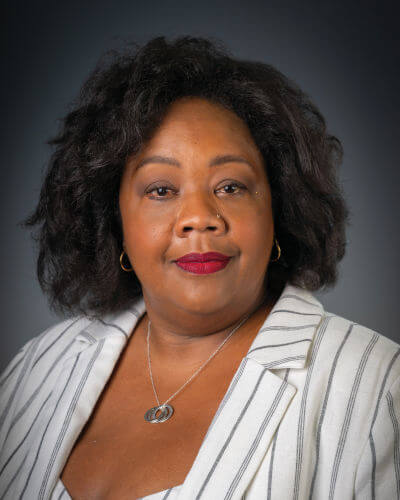
Well, I can’t believe this year is over. My term as DMAW board president has been quite the whirlwind.
My first letter to you spoke about being resilient in the face of the challenges we face in the nonprofit sector. While those challenges remain, we have proven, as the Bridge Conference theme suggested, that we are far stronger than the moment. Resilience has been a day-to-day theme for so many of us: As we struggle to balance life and work, sometimes it feels like every day is a test of our courage, sanity and health.
I encourage you to lean into your village when challenges arise. A mentor, a colleague, a friend, your family — your village is made up of whoever you choose to call family.
And the village has shown up at DMAW in 2026. This year, our call for board nominations drew the largest slate of nominees in our recent history. The candidates have also been strong volunteers over the past several years, cochairing our events, recruiting speakers and planning educational content, writing articles for this magazine and our blog, and so much more. Welcome to our newly elected and re-elected 2027 board!
And, I hope to see you at our Best of Direct Awards Ceremony and Holiday Party (see page 3 for more details). This year, our Changemaker of the Year Award will be presented to Gretchen Littlefield, CEO of Moore. Our Hall of Leaders inductee is Polly Papsadore, our own DMAW past president and president of The PMG Family. Both of these incredible leaders have been tireless advocates for the nonprofit community, working with nonprofits to maximize outcomes and make a lasting impact. These are just two of our honorees — I don’t want to give away the full list! Come out and join us to toast another successful year at DMAW.
Finally, thank you. Thank you to all of you who have supported us, helped us grow and given us your time, efforts and brainpower. We would not be able to have the impact that we do without all of you. Congratulations to Leigh Corrigan-Owens at Mal Warwick DonorDigital, your incoming DMAW board president. Best of luck!
Joanne Wilson jwilson@humaneworld.org
Committee Spotlight
Stronger Partnerships, Greater Value in 2027

As DMAW looks ahead to 2027, the Marketing Opportunities & Partnerships (MOPs) Committee is focused on enhancing how we engage with, recognize and deliver value to our corporate partners. Our partners play an essential role in DMAW’s success, helping us deliver high-quality educational programming, foster meaningful industry connections and create opportunities for professional growth.
For 2027, the MOPs committee is working to introduce a more strategic, transparent and partner-friendly program designed to strengthen relationships, simplify investment decisions and maximize value.
A More Strategic Approach to Partnership Value
One of the committee’s priorities is creating a clearer distinction between year-round partnership recognition and individual event sponsorship opportunities. Historically, partners have received visibility through their annual partnership benefits while also applying sponsorship credits toward events where they were already being recognized. While this approach provided flexibility, feedback suggested that it could create overlapping benefits and diminish the perceived value of additional event sponsorship investments.
The proposed 2027 structure more clearly separates annual partnership benefits from event-specific sponsorship opportunities. This approach ensures that partners receive meaningful recognition for their year-round commitment while preserving the distinct value and visibility associated with individual event sponsorships.
The proposed program also introduces a minimum event spending commitment, encouraging partners to consider their engagement across DMAW’s full calendar of educational programs and networking experiences. By planning for the full calendar at the beginning of the year, DMAW can strengthen advance planning while partners can make more intentional decisions about where to invest, which audiences to reach and how to maximize their involvement.
Greater Visibility and a Better Partner Experience
For 2027, DMAW is developing a redesigned partnership web page that will provide greater visibility for participating organizations and better highlight their contributions to our professional community. A comprehensive Partnership Program Guide is also being created to provide prospective and returning partners with clearer information about available opportunities, benefits and investment expectations.
Together, these enhancements are intended to make it easier for organizations to evaluate opportunities, understand the value of participation and build a partnership strategy that aligns with their business objectives.
Building Partnerships for Impact
The MOPs committee recognizes that successful partnerships are about more than logos, sponsorship placements or financial commitments. They are about building relationships that create shared value for our partners, our members and the broader direct marketing community. As DMAW expands its educational offerings, introduces new programming and strengthens engagement in markets such as Philadelphia and Boston, we see opportunities for partners to connect with new audiences and support the continued growth of our industry.
Our vision for 2027 is a partnership program that is easier to navigate, more intentional in its structure and more valuable for everyone involved. We extend our appreciation to the MOPs committee and our corporate partners for their continued feedback, collaboration and investment in DMAW.
Interested in becoming a DMAW partner? Connect with the DMAW team to learn more about the opportunities being developed for 2027.
Jaime Grams is the senior vice president of business strategy at The PMG Family. Reach him at jaime.grams@pmgdirect.net.
How I Got Here
DMAW members reflect on their starts that shaped their career paths to today
While direct marketing and nonprofit management are now growing fields of study at colleges and universities, many of us took meandering routes to get here. Over the years, I have heard countless stories from DMAW members whose areas of study have been vast. Our newest Direct Impact column, “How I Got Here,” showcases our members’ backgrounds. Enjoy the next installment, featuring Katy Jordan and Olga Moshinsky Woltman — and contact us at comms@dmaw.org if you’d like to be featured.

Principal and Founder of Katy Jordan Consulting
Partner at The Benevolence Group
During my educational journey, I figured a music degree only led to two paths: teaching or performing. Neither really felt like my true calling. I started college studying chemical engineering, but two-and-a-half years in, I realized my heart was elsewhere. Music was my passion. I played piano and viola, spent years in orchestras and always intended to keep music in my life.
The light-bulb moment came during a summer internship with the Baltimore Symphony. My eyes were opened to the world of arts administration: These incredible institutions couldn’t survive without selling tickets and raising funds. Inspired, I pivoted, graduating with a degree in music composition alongside minors in engineering, chemistry, mathematics and economics.
Shortly after school, I joined the marketing team at the Baltimore Opera Co. The opera was struggling with an unsustainable business model, but during my four years there — while earning my MBA in marketing — I built its first email marketing program, social media presence, and foray into online ticket sales and fundraising. Though the company ultimately dissolved under Chapter 11, that trial-by-fire experience set my path.
I moved over to the agency side as a digital account executive at CDR Fundraising Group, bringing together my background in the arts, business training and digital marketing to help nonprofits connect with broader audiences and unlock new streams of donor support.
My trajectory was set.
We talk a lot about how we find our way into this industry, but not as much about why we choose to stay. I spent 15 years on the agency side, driving change, innovation and growth for agencies and nonprofits alike. What keeps me here are the people who make up this unique sector. The work we do is important and necessary. And, the people we encounter along the way make it a space that’s truly hard to leave.

Founder, LemonSkies
Vice President of Strategic Communications, ALS Association
I came up in digital fundraising back when “digital” meant figuring out whether to put a donation link in an email. We tried it. It worked.
I spent those early years alongside direct mail colleagues, absorbing how they thought about donors — cadence, the offer, the ask. Then came coordination, integration, omnichannel giving. Now we are staring AI in the face. The donors didn’t change, but the tools in our arsenal to build relevance and relationships multiplied.
Even as my roles expanded into broader nonprofit marketing and communications, the fundraising mindset never left. I’m always looking for the opportunity to optimize, to steward, to give someone a reason to contribute.
One throughline has held across every role: Fundraising isn’t a department. It’s a way of thinking. In any organization worth its mission, everyone is a fundraiser — development, communications, programs, research, leadership. The question is whether we teach them to recognize and own it.
What direct response gave me is a focus on the human on the other end. Not the segment. Not the channel. The person and what motivates them. Every campaign I’ve ever built starts there with a real story, a real face, a real reason to act.
A Bigger Year Ahead for DMAW

As we look ahead to 2027, the Direct Marketing Association of Washington (DMAW) is preparing for an exciting year of growth, innovation and meaningful connections. Building on the strength of our community, we are expanding educational programming and professional development to meet members’ evolving needs and help them connect, collaborate and grow throughout their careers.
Expanding Our Educational Experiences
Returning in 2027 are our signature programs, including Fundraising Fundamentals, Sustainer Day, Production Day, the Acquisition Summit, Creative Day and the Multi-Channel Innovation Summit. We’re also introducing new educational experiences that reflect the changing landscape of our industry:
Deep Dive in Digital (July). A new program exploring emerging digital strategies, tools and approaches to engaging audiences in an increasingly connected environment.
Data, Tech and Platforms (Sept. 16). A new educational experience focused on the technologies, data strategies and platforms transforming how organizations connect with donors and measure results.
Industry Field Trips. Opportunities to go behind the scenes at production facilities, caging operations and call centers to gain firsthand insight into the processes that power successful campaigns.
Finally, an expansion of virtual learning opportunities through topic-based webinars, sponsored educational sessions and specialized fundraising and sustainer series will make it easier for members to access relevant professional development regardless of their location or schedule.
Building Connections Beyond D.C.
DMAW’s community continues to grow, and in 2027, we’re committed to creating more opportunities for professionals to engage with us beyond the Washington, D.C., metropolitan area.
Members can look forward to expanded programming and networking opportunities in Philadelphia and Boston, with events planned for both the spring and fall.
Closer to home, our popular spring and fall member meetups will return, providing informal opportunities to reconnect with colleagues, build new relationships and welcome professionals who are discovering DMAW for the first time.
Whether you’re a longtime member or new to the association, these experiences are designed to make our community more accessible, connected and welcoming.
Investing in the Next Generation Through Mentorship
One of our priorities for 2027 is strengthening the pipeline of future leaders in direct marketing and nonprofit fundraising. Through expanded mentorship programming and the continued engagement of Young DMAW (YDMAW), we want to create more intentional opportunities for emerging professionals to connect with experienced industry leaders.
Our vision for mentorship is to foster relationships that support career development, encourage knowledge sharing and help newer professionals navigate their careers.
YDMAW’s popular Speed Networking event will also return in September, creating another opportunity for professionals to build connections that can lead to mentorship, collaboration and career growth. We also plan to strengthen outreach to students and early-career professionals, introducing them to DMAW’s professional community and helping them see a future for themselves in the industry.
Creating Opportunities to Give Back
Community engagement remains central to DMAW’s mission.
In 2027, we plan to offer two dedicated Service Days, one in May and another in November, giving members opportunities to come together in support of causes that make a difference.
These experiences reflect an important part of who we are as an association: professionals who believe in using our collective talents, relationships and resources to create positive impact.
We will also continue encouraging members to become involved in committees, volunteer leadership and association initiatives that help shape DMAW’s future.
Celebrating Excellence and Industry Leadership
Our signature industry celebrations will remain important moments on the 2027 calendar.
The MAXI Awards will return in October to recognize outstanding creativity, strategy and results across direct response marketing.
We’ll close the year with Best of Direct on Dec. 1, celebrating the people, partnerships and accomplishments that make our industry exceptional.
Members can also look forward to major opportunities for learning and connection through the Nonprofit Fundraisers Symposium, March 3-5, and the Bridge Conference, Aug. 4-6, bringing together professionals from across the fundraising and direct marketing communities.
Your Membership, Your Community, Your Future
As DMAW continues to evolve, our commitment to members remains at the center of everything we do.
We recognize that today’s professionals are looking for more than a calendar of events. They want practical knowledge, authentic connections, opportunities to advance their careers and a professional community that supports their success.
In 2027, we’re working to deliver those experiences — with our members helping shape the year ahead. Attend a program you haven’t experienced before. Introduce a colleague to DMAW. Volunteer for a committee. Share your expertise as a mentor. Or simply make a new connection at one of our many gatherings.
Together, we are building a stronger, more connected and more innovative direct marketing community.
We look forward to seeing you in 2027!
From Shared Values to First Gifts: Turn New Subscribers Into Engaged Supporters


Does this sound familiar? You run an email acquisition campaign, the names land in your database and you have a really great plan to steward and engage with them — but the team gets busy and the project is forgotten.
So the list sits. And, eight months past the point when a subscriber would remember who you are, somebody says, “We should really email those people.”
Recognize the Value Behind the Action
We get asked to support things all day long and say “no” to nearly all of them, so when somebody signs a petition or gives you their email address, they’re telling you something real about themselves. The real reason they chose to act is a personal value, and they’re showing you a version of themselves they feel good about.
Behavior, tastes and styles change. But your values and sense of identity rarely do.
Where you shop has changed plenty of times, but if you’re a cat person, your identity as a person who cares about animals hasn’t shifted and likely never will. It’s a value you hold. When you take action to reinforce your values, you show the world who you truly are.
So, what does this look like in practice? Consider these two responses after signing a petition to fund community breakfast programs.- “Thanks for signing our petition to fund breakfast programs in our city.”
- “Thank you for being the kind of person who believes every child deserves breakfast before school.”
Same action — but the first message is a transactional thank-you for your behavior, and the second talks to you as someone who shares a particular value.
Build a Four-Email Welcome Series
Welcome new subscribers with four emails over their first 30 days. Each email has a job to do:
- The first email opens with gratitude, reflects the subscriber’s identity or value, reminds them what they did and tells them what they’ll hear from you and how often. There’s no ask. And we don’t just mean no donation ask — we mean no ask at all.
- The second is about who else is part of this with them, and real numbers help: “2,981 people signed this petition and 33 became donors this week.” That second number referencing donors is priming the subscriber without specifically asking them to donate. It makes donating feel more familiar when they are asked later. As a call to action, try linking to a short supporter survey on your website and asking your subscribers to fill it out. Donors and advocates love to be asked to share their opinion.
- The third email is proof: one story tied to the thing they already told you they care about. This sets up the ask without making it.
- The final email is the ask — whether for a monthly or one-time gift. Make sure it’s small, specific and one click away. It should remind them of what they did first because a month is plenty of time to forget. The majority of emails are read on mobile devices, so make sure that whatever your call to action is, it can be easily completed on a smartphone.
Keep the Message Consistent
Decide what you’re asking for before you spend a dollar on acquisition. For example, on one campaign, the ask was for $5 a month.
The donate button went to a page built for that $5 campaign alone, with the same sentence at the top that had run through the petition and every email since, and $5 monthly already selected. Trust is the only currency we really have with donors, so if you asked for one thing, the page must match — not be a generic donation page.
Reinforce Emails With Texts
Backing up fundraising or advocacy emails with SMS messages is a great way to reinforce your campaigns. Text messages have a 99% open rate and 6.8% click-through rate, so adding them to your email program has huge benefits for charities. M+R found that adding text messaging to an existing email program can increase the amount of revenue raised per person by 25% or more.
Text messaging is also a valuable stewardship activity, helping you thank your donors and keep supporters up to date with your initiatives. In our testing at Care2, we’ve learned that text messages with rich link previews featuring titles and images perform far better than plain text links, as they are seen as more trustworthy by recipients. We’ve also learned that the photo used in your email or your text message should match the image on the landing page for your call to action. When there’s an image mismatch, supporters are far more likely to bounce and not complete the call to action.
Continue the Conversation
Ask for replies! Try something as simple as “I’d love to know what made you take this action,” because people will write back, and you’ll end up with content you couldn’t have written yourself. Replies also teach email service providers that your mail is wanted and legitimate, which helps deliverability.
If someone says you’re emailing too much, go and look at the numbers. An unsubscribe rate lower than 1% per send is normal, and unsubscribes are a gift anyway.
None of this needs a bigger program or a messaging overhaul. It’s four emails, the same sentence carried from the petition through to the donation page, and a decision made early about what you’re going to ask for. Someone raised their hand and told you who they are, so the whole job is to say it back to them clearly enough that giving feels like the next thing they’d naturally do.
Sara Hoshooley of Charity Shift is a fundraising consultant and coach who loves helping organizations grow their fundraising through campaigns, strategy and customized coaching.
Claire Kerr is a nonprofit veteran who has worked for organizations in economic development and fundraising sectors. At Care2, she works with charities and nonprofits as they use digital channels to acquire new supporters, as well as advocate for progressive causes online.
From the Margins to the Mainstream: Why DAFs Belong in Mass Market Fundraising

Once viewed as a niche giving vehicle reserved for ultrawealthy donors, donor-advised funds (DAFs) are becoming a core driver of nonprofit revenue growth, donor retention and long-term fundraising sustainability across the donor spectrum. For direct response fundraisers, their relevance extends well beyond major gifts: two-thirds of DAF gifts are under $1,000.
That’s one of the key findings in the “2026 DAF Fundraising Report,” which draws on five years of data from 54 nonprofit organizations representing more than $26 billion in revenue and 147 million gifts. The takeaway is clear: organizations that embrace DAF fundraising see larger gifts, stronger donor loyalty and faster revenue growth.
DAF Giving Outpaces Non-DAF Giving
One of the report’s most striking findings is the gap between growth in DAF revenue and non-DAF revenue. Across the five years of the study, organizations saw median DAF revenue grow 75%, compared with just 12% growth in non-DAF revenue.
DAFs are also becoming a larger share of the individual giving pie. The median organization realized 11% of its individual giving revenue from DAFs in 2025. Among the highest-performing organizations, DAFs represented nearly one-quarter of all individual giving revenue.
For fundraisers facing stagnant acquisition rates and rising retention challenges, this trend is difficult to ignore. DAFs increasingly serve as a bright spot in an otherwise difficult fundraising environment.
The Myth of the ‘Major Donor Only’
Selfishly, as a direct response marketer and mass market fundraiser, I was most excited to see that the study confirmed DAFs are just as relevant to direct response fundraisers as they are to major gift officers. Maybe more so.
In fact, 67% of all DAF gifts are less than $1,000. The largest concentrations of DAF gifts fall in the $250 to $499 and $1,000 to $4,999 ranges, underscoring the role that DAF gifts play in mass market and mid-level giving programs.
For direct response fundraisers, this finding points to the value of promoting DAF giving across mass market channels, including direct mail, email, SMS and even peer-to-peer programs.
With reports suggesting the average DAF account size is more than $90,000, even a small DAF gift could signal the potential for a much larger philanthropic investment from that donor.
In other words, DAFs are no longer just a major donor giving vehicle. DAF strategy must be part of mass market fundraising programs too.
DAF Donors Give More and Stay Longer
It should be no surprise that DAF donors give larger gifts. More surprising is their higher retention, even in the face of data challenges.
In this year’s study, the average DAF gift was 23 times larger than the average non-DAF gift. Even when excluding gifts surpassing $25,000, DAF gifts remained 17 times larger. The median DAF gift was $300 — 12 times larger than the median non-DAF contribution.
Perhaps even more important, DAF donors are significantly more loyal. Retention rates for DAF donors were 13 percentage points higher than non-DAF donors in 2025.
For organizations focused on sustainable revenue growth (and who isn’t?), this finding may be even more meaningful than gift size. Retaining donors remains one of the most cost-effective ways to grow fundraising programs.
The study further examined more than 50,000 instances in which existing donors switched from traditional giving methods (check, credit card, etc.) to using a DAF for their philanthropic support. The results challenge concerns that DAFs merely redirect charitable dollars rather than increase philanthropy.
Among donors who switched to using a DAF, 84% either maintained or increased their giving to the organization. More impressively, the median donor doubled their annual support after making the switch. On average, giving rose to a remarkable 10.6 times its previous level.
For nonprofit marketers, this suggests that encouraging DAF adoption among existing supporters may be one of the most overlooked upgrade strategies available today.

Credit: “2026 DAF Fundraising Report” from Chariot and K2D Strategies
Sector Matters
For the first time, the 2026 report provides sector-level benchmarks that allow organizations to compare themselves against their peer groups.
International relief organizations saw the highest concentration of DAF revenue, with DAFs accounting for 23.75% of total individual giving revenue in 2025. Environmental organizations followed closely at 19.27%, while arts and culture organizations experienced one of the fastest growth rates, with an increase of nearly 96% over the study period.
These new data points give fundraisers a more realistic way to evaluate performance. Rather than asking, “How are we doing with DAFs?” organizations can ask, “How are we doing relative to our peers?”
Building a DAF Strategy
Beyond the data, the report emphasizes that successful DAF fundraising requires intentional planning. Organizations realizing the most significant growth in DAF giving treat DAFs as an organization-wide priority rather than a single-channel tactic.
Also featured in the report are insights into the DAF strategies of the International Rescue Committee and the American Civil Liberties Union. Several themes emerge that drive success:
- Cross-functional collaboration
- Consistent donor education
- DAF-specific stewardship
- Integrated marketing campaigns that mention DAF giving across channels
At the foundation, though, there are three pillars that make or break your DAF fundraising efforts:
- Data. Track and analyze DAF donors accurately.
- Communications. Include DAF messaging across donor touch points.
- Technology. Remove friction from the giving experience and make DAF gifts easy to complete.
Organizations seeing the most growth are not passively waiting for DAF gifts to arrive. They are actively encouraging, stewarding and optimizing DAF giving throughout the donor journey.
The Bottom Line
The “2026 DAF Fundraising Report” makes clear that DAFs have moved from the margins to the mainstream of nonprofit fundraising. DAF donors give more, remain loyal longer and frequently increase their support.
For direct response marketers, the question is no longer whether DAFs matter. The question is whether your organization is prepared to capitalize on one of the fastest-growing segments in philanthropy.
Download your free copy of the “2026 DAF Fundraising Report” by visiting daf.K2DStrategies.com.
Karin Kirchoff is president of K2D Strategies and a co-author and researcher of the “2026 DAF Fundraising Report.” Contact her at kkirchoff@k2dstrategies.com.
Power of ‘No’: Boundaries That Strengthen Your Mission

We want to start with a confession: All three of us have answered emails during paid time off. We’ve taken on work outside our roles just to help. We’ve said “yes” when we already knew, deep down, that our capacity was gone.
If that sounds familiar, you’re not alone. When we asked a room full of nonprofit fundraisers and leaders whether any of that resonated, nearly ever hand went up — accompanied by squeaks from rubber ducks we’d handed out for emphasis. Nobody looked surprised. What surprised people, a little, was what we said next: The problem isn’t generosity. It’s unmanaged generosity, with no edges, no limits, no plan.
Why Nonprofit Teams Struggle to Say ‘No’
Our sector has a particular relationship with the word “no.” In most industries, declining a task is just declining a task. In ours, it can feel like declining the cause itself, as if capacity, not commitment, were the thing standing between an organization and its mission.
Three patterns show up again and again:
- Mission-driven guilt. Saying no can feel indistinguishable from letting the work down, even when the request has nothing to do with actual mission impact.
- Lean teams, big asks. When everyone on a team wears five hats, saying “That’s not my job” rarely feels like a real option. It’s functionally your job, plus four others. Underneath that sits a quieter anxiety: If I say no, am I being difficult? Am I about to disappoint my team?
- Yes, as proof of dedication. Overextension gets rewarded — even celebrated — while boundaries get quietly read as disengagement. Service-oriented roles carry particular pressure to overdeliver, but being helpful was never supposed to mean being infinitely available.
Every “yes” is a trade-off. If everything is a priority, nothing is. And the sector’s version of that trade-off has a familiar shape: burnout that looks like commitment, until it isn’t.
The nonprofits that struggle most with saying “no” don’t necessarily have bad cultures. They have the strongest mission pull. When the work matters this much, every request feels mission-critical, so nothing ever gets deprioritized. The healthiest teams aren’t the ones saying “yes” the most. They’re the teams that can look at a list and rank it.
Reframing ‘No’ as Strategic Leadership
Most of us were taught, somewhere early in our careers, that “no” is a failure to be a team player. We want to offer a different frame: “No” is not rejection. “No” is prioritization.
This isn’t a self-care talk. It isn’t about protecting your evenings, though that matters too. It’s about organizational effectiveness. When you say “yes” to everything, nothing gets your full attention, including the work that actually moves the mission forward.
You are not protecting your time because you are selfish. You are protecting your time because your work matters.
What we call a “strategic no” is a check against five criteria that separate a boundary from a wall. A good strategic no protects priorities, preserves relationships, creates clarity, redirects constructively and reinforces mission alignment. Notice that none of those criteria are “protects me.” Every one of them is about the mission or the relationship, which is what makes a well-delivered “no” a form of leadership communication rather than just a personal limit.
To put that into practice, we developed a simple sequence, the four-part boundary response:
- Acknowledge. “I understand this is important.” This isn’t a stall tactic. It signals that you heard the request before you respond to it.
- Clarify reality. “My current workload is at capacity.” Not an apology, not an excuse, just the truth.
- Redirect or prioritize. “If this becomes the priority, we may need to shift X.” This turns a “no” into a conversation, with a real trade-off attached.
- Offer an alternative. “Could we revisit this next week? Could another team support this? Can we scale phase one?”
The sequence matters. Skip the acknowledgment and jump straight to “I’m at capacity,” and the same information lands cold. The order is what makes it read as leadership instead of refusal.
Small language shifts carry the framework into daily practice. Instead of “I can’t,” try “To do this well, I’d need to reprioritize other commitments.” Instead of “That’s outside scope,” try “We’d be happy to explore that as an additional phase.” Instead of “I don’t have time,” try “I want to make sure I can give this the attention it deserves.” Same boundary. Completely different conversation.
Delegation, Trust and Sustainable Leadership
For leaders, setting boundaries also means recognizing that doing everything yourself is not leadership. Delegation is staff development, not offloading. Hoarding work isn’t dedication — it’s a bottleneck. Psychological safety starts with how leaders talk about workload, and healthy boundaries are modeled, not just permitted. Burnout doesn’t stay contained to one person. It trickles down. If your team only succeeds when you overextend yourself, the system is broken.
That’s the problem with hero culture, the unintentional reward system many nonprofits run on. Overwork, constant availability and crisis management get treated as virtues, while planning, sustainability and clarity — the things that actually make an organization durable — go quietly unrewarded. It’s worth asking: What does your organization actually reward — the fire or the person who prevented it?
Making Boundaries Visible
Boundaries aren’t just something you say — they’re something you build into your schedule. Blocking focus time, protecting meeting-free windows and genuinely defending paid time off aren’t nice-to-haves. If you’re still answering email on vacation, it isn’t really paid time off — it’s just work with different scenery. Calendar boundaries simply make those limits visible on a tool your whole organization can already see.
The instinct to say “yes” to everything usually comes from a good place. The goal isn’t to talk anyone out of caring. It’s to give people language and a framework for protecting the capacity that lets that care actually go somewhere. A well-placed boundary makes sustained commitment to the mission possible.
Jade L. Nguyen Swanson is director of business development at The Engage Group.
Joanne Wilson is vice president of advancement operations at Humane World for Animals and DMAW board president.
Bryan Casler is vice president of digital and artificial intelligence strategy at 4Site Studios.
The authors presented this topic, “Boundaries Build Brilliance: The Power of No” at the 2026 Bridge to Integrated Marketing & Fundraising Conference.

Our industry’s next generation of leaders are already making an impact! Learn more and join them at
dmaw.org/ydmaw.

I have worn many hats on my 20-year journey in the digital fundraising space. I’ve been an on-the-ground activist, obtained permits, organized protests and rallies, and ensured megaphone volumes were within city ordinances.
I’ve started nonprofit social media profiles on Twitter, Facebook, MySpace, Friendster and more. I’ve presented budgets and actuals to finance committees, shared campaign creatives and strategies with agencies and partners, written and edited email copy, and pivoted and analyzed data.
Heck, I even taught myself HTML from an actual book (back when Facebook was still a college networking interface) to figure out how to wrangle email creation in the what-you-see-is-what-you-get tools.
But where I’ve planted my roots and where I’ve found my true happiness is digital production. You may call it digital implementation, but essentially, I make your digital dreams a reality.
And throughout my career, I’ve been part of many successful teams and some not-so-successful teams. All of the most successful teams that I’ve been a part of had one thing in common: Everyone had a seat at the table — including production people like me!
If your brainstorming and strategy-building doesn’t include production people, here are four reasons why you should always invite your digital production specialist.
1. They Know Email Platforms’ Possibilities — and Limitations
Digital implementation specialists know the advantages and limitations of your email platform. The more hours I spend in platforms, the more I know how the team can push the system to do what we want it to achieve.
Right now, I can list which of the main platforms can or can’t run marketing automations — such as welcome series or donor retention messages — based on custom data fields versus built-in data fields. I know which platforms have the best built-in A/B testing functionality versus the ones where you must manually manipulate data to run a true A/B test across multiple messages.
Too many times, my team has received a fully fleshed-out digital fundraising strategy with an amazing engagement tactic, and we’ve had to turn around and write an email that started with “Actually, we can’t do this.” We hate that. We don’t want to do that.
2. They Bring Fresh Testing Ideas
Digital implementation specialists are full of ideas for tests and love to figure out how to do cool things, too. I’m on the email lists of no fewer than 50 other nonprofits — none of which are on my client roster or anyone else’s at my agency. I’m always checking out their messages to see how they’re laying things out and what tactics and tools they’re using. I’m looking for inspiration for A/B tests and opportunities to try something new to move the fundraising needle.
I’m also quick to forward an email when I see something neat, proposing how specific clients could do something similar.
3. They Keep Campaign Goals in Focus
Including digital production specialists also benefits you. When I’m added in the development phase of a campaign, I’m aware of and aligned with the ultimate fundraising goals. I know why we’re proposing a specific tactic or language framing, and I can ensure that the original intention carries through to the final product.
Too often, ideas are muddled by the back-and-forth edits and adjustments during the review process. When I am involved in developing the tactic and know the ultimate goal, I can help ensure the final tactics deployed in the message truly serve those goals.
4. They Boost Team Morale
And here’s the most important reason — morale. Who doesn’t love to see their name in lights? Watching a baby idea grow up and launch to a list of millions is amazing. Then you get to see loads of supporters engage and even donate because of an idea you had.
Your staff’s morale is key to workplace satisfaction, and inviting digital production specialists into the space to share and contribute gives them the chance to see their ideas make a direct difference.
If you’re lucky enough to have a team, or even a single person, who loves digital implementation, give them a seat at the table. When your digital production specialist is asked to share their experience or insight, you’ll walk away richer for it, and so will your end result.
Lindsey Twombly is the digital production director with Lautman Maska Neill & Company. In her role, Lindsey oversees the creation, testing and launch of engagement and fundraising emails and landing pages, ensuring the successful delivery of hundreds of nonprofit messages each month.
MEMBER SPOTLIGHT

Senior Account Director
ABD Direct
claire.recalde@abdata.com
When Claire Recalde graduated from Radford University with a degree in business marketing, she brought a longstanding interest in nonprofits to her job search. A posting for a role at ABD Direct offered a chance to bring those interests together.
“When I saw the job posting after college, I remember thinking it felt like the perfect fit for me,” she said.
Today, the senior account director finds satisfaction in both the variety of the work and the results it delivers for clients.
“I love that I’m never bored and always learning something new, whether it’s figuring out an Excel formula, learning about a new USPS promotion or coming up with a really cool concept for a client,” she said. “Then, seeing the results come in and knowing that the idea actually worked makes it all feel real and reminds me how impactful the work we do can be.”
Outside work, Claire lives in South Riding, Virginia, with her husband, their 3-year-old son and two dogs.
Who do you consider your mentors?
I’ve been lucky to have so many mentors throughout my career. When I started at ABD Direct right out of college, I worked with Joe Manes, Marie Dullea Prentice and Kate Hollandsworth, and they really became my D.C. family. I was brand new to the industry, and they taught me so much of what I know about direct response fundraising while also making work a place I genuinely enjoyed being. I try to channel pieces of each of them when working with my teams and hope I can create that same kind of experience for others.
What is the most helpful step you took to advance your direct marketing career?
Learning to advocate for myself has probably been the biggest thing that helped me advance my career. I started at ABD Direct right out of college in an entry-level role and have grown into a senior account director. Along the way, I’ve learned to speak up when I’m ready for more responsibility and be honest about where I want to grow. I’ve also never stopped learning. Each new role has pushed me outside of what I already knew and helped prepare me for the next opportunity.
Tell us about your volunteer experiences with DMAW.
I’m on the DMAW Marketing Committee and also help manage the DMAW blog, so if you have a blog idea, please reach out. I also love judging the MAXIs each year. It’s one of my favorite ways to see what others in the industry are testing and the creative campaign concepts they’re coming up with.
Describe yourself in three words.
Organized. Curious. Caring.
Describe your life in six words.
Busy. Chaotic. Organized. Happy. Loved. Full.
QUICK TAKES
 BOOK:
I love a good mystery with lots of twists. I love a book that completely catches me off guard and makes me rethink everything I thought I knew.
 LEISURE INTERESTS:
I love to travel, try new restaurants and find new experiences. I’m always planning the next trip, dinner reservation or something fun to do with my family and friends.
Direct Impact is the member exclusive magazine from the DMAW, login to read the full issue and access the archives. Not a member yet? Join today to get every issue and more!
