
July/August 2026 Vol. 64 No. 3
Smarter Segmentation, Stronger Results: How Better Audience Strategy Cut Costs and Raised More

For most nonprofit fundraisers, year-end is the ultimate stress test. Volumes spike, inboxes fill up and the margin for error narrows dramatically as the days left to hit annual revenue targets dwindle. Email has long been one of our strongest-performing fundraising channels — especially in the fourth quarter — but it is also one of the easiest to overuse.
As we entered our most recent year-end campaign at Save the Children, the question wasn’t whether email still worked — it absolutely did — but whether we were using it as efficiently and strategically as we could.
We needed to get sharper. Not louder.
Resetting Our Non-Donor Strategy
Over time, our email file had grown substantially, particularly within our non-donor audience. We had more than a million people who had been on our list for more than a year — some for three years or longer — without ever making a gift. Historically, many of these names continued to receive our full slate of messaging under the assumption that enough volume would eventually produce marginal returns.
At the same time, engagement signals were becoming less reliable. Apple Mail Privacy Protection and similar changes made open rates increasingly noisy, while proxy opens blurred the line between genuine supporter interest and automated activity. In practice, this meant we were often paying heavily to over-message people who had never shown meaningful intent to give.
Because year-end dramatically amplifies send volumes, this inefficiency was magnified. Rather than continuing to accept it as a cost of doing business, I knew it was time for a reset — one that focused less on reach for its own sake and more on real engagement.
We had begun using Salesforce Marketing Cloud’s Einstein engagement algorithms several years earlier, but continued list growth and weak performance from this audience suggested our segmentation logic needed refinement. When I examined open and click likelihood scores alongside lead tenure across hundreds of thousands of records, it became clear that relatively small adjustments could materially improve efficiency.
By weighting click behavior more heavily than opens and refining how we treated extremely high open likelihood paired with little or no click likelihood, we significantly reduced the size of our long-term non-donor segment. The result was a smaller, more efficient audience that delivered stronger revenue per thousand sends and allowed us to cut a substantial amount of email volume. In practical terms, the savings from reduced send costs outweighed the modest revenue decline from this segment, helping delay by several months the need to purchase additional email capacity in 2026.
Raising the Bar for Our Strongest Donor Audiences
Improving efficiency on the non-donor side was only one half of the strategy. In parallel, we also saw an opportunity to raise more from donors who were already inclined to give — by being more intentional about how much we were asking them to contribute.
Save the Children has long used propensity scores in offline channels such as direct mail to identify donors more likely to upgrade, re-engage after lapsing or give at higher levels. Email, by contrast, had historically relied more heavily on simpler engagement rules tied to recent behavior.
Ahead of year-end, I worked closely with our email channel owner and our digital marketing and creative agency, Blue State, to apply our mid-level conversion propensity model to email audiences drawn from our current-year and lapsed donor segments. These were already strong-performing audiences, so the goal was not to increase volume, but to better align ask amounts with a donor’s projected giving capacity and likelihood.
By identifying a mid-level propensity subset within these segments, we were able to present higher ask arrays to donors more likely to respond at those levels. This drove a meaningful lift in key performance indicators, including average gift and revenue per thousand sends, compared to standard versions of the same audiences.
Just as importantly, this work helped demonstrate that propensity-based approaches developed for offline fundraising can translate effectively into email when applied with clear intent and cross-channel alignment.
What We Chose Not to Do at Year-End
One important strategic decision we made during year-end was which new approaches we would be better off waiting to deploy. Although we had access to a sustainer conversion propensity score within our digital marketing platform, we intentionally chose not to use it during year-end. Sustainer acquisition was not a strategic priority at that moment and introducing another new ask strategy during peak fundraising risked diluting focus and clarity.
Instead, we treated year-end as a proving ground for segmentation fundamentals — right-sizing audiences, aligning asks with giving potential and improving efficiency. That discipline paid off and positioned us well for the year ahead.
In early 2026, we began testing sustainer propensity in a more appropriate context. While we will need additional data to reach statistical significance, early results have been encouraging and have already reinforced a broader lesson: Timing matters as much as targeting.
Our Email Segmentation Waterfall
As we look ahead, our email program is now anchored in a clear segmentation waterfall that reflects both donor lifecycle and giving potential, with additional micro-segments currently being tested to support more tailored ask strategies:
- Mid-level donors
- Active sustaining donors
- Mid-level conversion propensity segment
- Sustainer conversion propensity segment (currently being tested)
- Current-year one-time donors (planning on testing these micro-segments: current-year single and one-time givers and current-year multi-one-time givers)
- Lapsed donors (currently testing these micro-segments: lapsed one-time donors and lapsed sustaining donors)
- New leads
- Non-donors
Key Takeaways
Several lessons stand out from this work:
- Integrated audience intelligence works best when applied deliberately.
- Engagement signals must be continually reevaluated as technology evolves.
- Efficiency is not the opposite of growth — it is often the path to it.
This effort was very much a team endeavor, and I’m grateful to colleagues across mass market fundraising, our email channel owners, our partners at Blue State, and the Business Technology Services team for their collaboration. As we look ahead to future year-end campaigns, our focus is not on sending more messages, but on sending smarter ones.
Jon Wheeler is senior adviser of marketing technology at Save the Children US. After previously leading the organization’s email and mobile marketing channels, he now focuses on advancing enterprise marketing technology, data and analytics capabilities across the organization.
PRESIDENT’S PERSPECTIVE
Spring Is in the Air

I can’t believe that my term as president has been flying by! It has been my genuine and sincere pleasure to meet so many of you — our members — out and about at our events. I love engaging with you and hearing what motivates you to work in the nonprofit sector, whether you are at an organization or one of the many companies that support our work. Thank you for connecting with me!
And, speaking of connections, it’s Bridge time! The 20th annual Bridge to Integrated Marketing & Fundraising Conference is bringing so many of us together for two days of learning opportunities and networking. If you’re at the conference, please stop by the DMAW booth in the Solutions Showcase. The DMAW Board will be there, and we welcome the opportunity to speak with you and answer your questions.
If you are there with us, I hope you take time between all the education offerings to also connect with the many partners who specialize in supporting nonprofits. Whether you are a small startup looking for options to expand your reach or a larger operation looking to maximize and improve your efficiency, you’ll find partners ready to help you do more for your mission.
Another way to connect is to become a DMAW member. We will work closely with you to determine which membership level is right. Our nonprofits have the choices of individual contributor levels to whole organization rates while our corporate memberships are tiered to suit our partners’ specific needs.
In return, you can take advantage of our many annual program options, including the MAXI Awards, which will take place Oct. 2 at the National Housing Center. We are pleased to once again feature live voting for the Dynamo (creative digital), Stamp of Excellence (creative direct mail) and Omni-WOW (creative multichannel) awards.
It’s been quite a year so far, and I look forward to connecting with you at our events.
Joanne Wilson jwilson@humaneworld.org
Committee Spotlight
Get to know the people behind the scenes powering our industry’s top events and programs, and how you too can get involved.
Thoughtfully Uncomplicated: DMAW’s Program Approach

Ask what makes a professional organization worth belonging to — really worth it — and the answer usually comes back to one thing. Does it make me better at my job? That question is at the center of everything the DMAW Program Committee does.
Leading the committee this year is a tri-chair team: Katy Jordan, Adam Faircloth and me, Justin McCord. Katy is in her second board term — she brings continuity, institutional perspective and clarity on what DMAW audiences need. Adam is in his first, bringing fresh energy and new thinking, especially as a leader within a nonprofit. And, as a former board member and Bridge co-chair, I try to be the link between the strategy and attendee experience.
Together, the three of us bring something you don’t always find in volunteer leadership: the right mix of experience and momentum.
A Strategy Rooted in What Matters
The Program Committee’s strategy isn’t complicated: Deliver educational content that aligns with DMAW’s mission and equips nonprofit professionals with the knowledge and the tools to succeed.
That’s it. But doing it well? That takes rigor.
This year, the committee is pressure-testing content against what nonprofit leaders actually need — not just what sounds relevant on paper. That means a sharper focus on innovation, data-driven approaches, and real channel and functional expertise. Programming that earns the time people give it.
The Work Behind the Work
Every DMAW educational event starts with an event chair. The Program Committee’s job is to find the right person for each event — and then partner with them to build the strategy, shape the format and identify the speakers who can deliver.
It’s a collaborative model, and it matters because programming decisions are made by the people closest to the topics and audiences — with the committee providing the connective tissue that keeps everything aligned.
Content Has Always Been the Hallmark
DMAW’s strength has never been accidental. Content — the quality, the relevance and the way it meets professionals where they are — has been the throughline of this organization’s success. That isn’t changing.
The Program Committee takes that seriously. Every event is a chance to deepen expertise, spark new thinking, and remind people why membership matters — not in the abstract, but in the real, practical, show-up-and-do-the-work sense.
This year’s team is ready to deliver exactly that.
What’s Coming Up and How You Can Get Involved
The calendar ahead reflects that commitment. There’s something on this calendar for everyone — whether you’re building your expertise, expanding your network or just looking to stay sharp. See what’s next and how to register on page 3.
And if you’ve ever thought about shaping what DMAW programming looks like — this is your invitation. The committee is actively looking for event chairs for the year ahead. It’s one of the most rewarding ways to give back to this community and put your expertise to work.
Raise your hand. Send an email to info@dmaw.org with the subject line: I want to volunteer.
We’d love to hear from you.
Justin McCord is the chief operating officer at RKD Group.
How I Got Here
DMAW members reflect on their starts that shaped their career paths to today
While direct marketing and nonprofit management are now growing fields of study at colleges and universities, many of us took meandering routes to get here. Over the years, I have heard countless stories from DMAW members whose areas of study have been vast. Our newest Direct Impact column, “How I Got Here,” showcases our members’ backgrounds. Enjoy the next installment, featuring Lisa French and Katie Tamaro — and contact us at comms@dmaw.org if you’d like to be featured.
Joanne Wilson is the vice president of advancement operations at Humane World for Animals and DMAW board vice president.

Executive Director
DMAW
If you asked me growing up what I wanted to be, I would have told you I was destined to be a record industry executive discovering talent, shaping culture and casually dropping names like I had a Grammy on speed dial.
While my career didn’t take me into music, that early interest in storytelling, influence and impact showed up in ways I never expected. Like many people in this field, I didn’t set out to work in fundraising — I fell into it.
Growing up, my family was deeply rooted in community engagement. Volunteering wasn’t optional in the Crosson household — it was required. Those experiences shaped my values and gave me a strong sense of purpose (and a habit of signing up for things).
In college, I combined my interest in communication with a passion for public service and expected to build a career in the public sector. Instead, I collected more rejection emails than job offers, and that detour ultimately led me into nonprofit work.
Over the last 15-plus years, my work in public service has grown into broader leadership roles, with a focus on public education and community-based organizations, particularly in early childhood education and student transportation. I’ve also had the privilege of serving in senior leadership roles across the association and nonprofit sectors, including as deputy executive director at Independent Electrical Contractors and executive director of Associates for Renewal in Education.
Today, I serve as executive director of DMAW, where I focus on growing membership, expanding programs and extending our reach into new communities. Across every role, my work has centered on bringing together strategy, people and purpose, and helping organizations do their best work and make a greater impact.
Outside of work, I’ve volunteered with organizations like the Columbia Lighthouse for the Blind and advocate for services supporting children with special needs, which is especially meaningful to me as a parent of a daughter with muscle-eye-brain disease.
Looking back, while I didn’t become a record industry executive, I did find a career where I can connect people, amplify important voices and help drive meaningful change. And honestly, that’s a pretty good track to be on.

Senior Vice President of Strategy
AKwire
I tend to avoid conflicts, I nearly faint at the sight of blood, and I’m not an animal person unless the animal is about 68 pounds, fluffy and called “Ruby.” While I don’t have the skills that could put me on the front lines, I knew early on that I wanted to support organizations that are working every day to make the world a better place.
Money — that was going to be my connection to these amazing organizations. They need funding to do their work, and I was going to be the one to help ensure they had the resources to continue the fight, continue saving lives and continue making this world a place that is safer and kinder for all of us.
I’m creative, smart (so my mom says), and could use my skills to help nonprofits raise more money, more efficiently, so that they can continue to do their work. And that’s how I got here. I’m grateful for where my path has taken me and grateful for my mentors, my colleagues and my current and past clients from whom I continue to learn from every day.
Geo-Expansion Recap: Philadelphia Nonprofit Summit

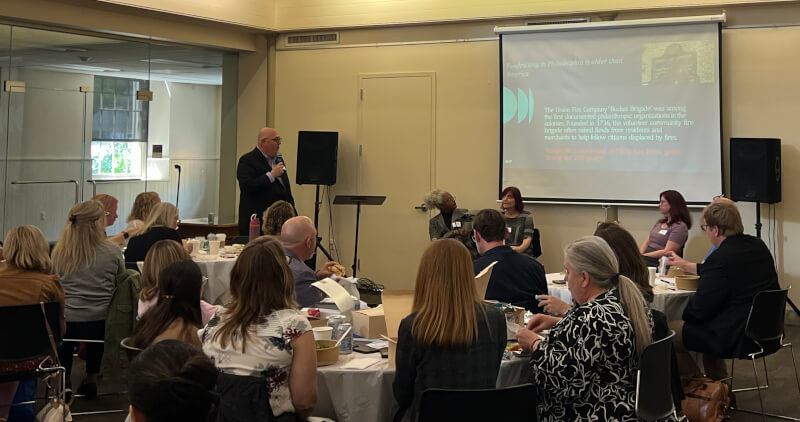
DMAW was proud to launch the inaugural Philadelphia Nonprofit Summit, bringing together professionals from across the region for a dynamic gathering focused on collaboration, innovation and impact.
Held in the heart of Philadelphia, this first-ever summit brought together leaders committed to advancing the nonprofit sector through practical insights and meaningful conversations about the future of fundraising and marketing. One thing was made clear over the course of the half-day event: the nonprofit community is stronger when we learn and grow together.
Advancing DMAW’s Geo-Expansion Vision
DMAW’s Geo-Expansion initiative is rooted in a simple but powerful goal of extending high-quality nonprofit education and community-building opportunities beyond the Washington, D.C.-Maryland-Virginia region and into new markets.
Through this effort, DMAW is working to:
- Expand access to professional development for nonprofit and fundraising professionals nationwide
- Build regional communities of practice that foster peer learning and collaboration
- Deliver practical, skills-based programming tailored to the evolving needs of organizations in different cities
- Strengthen the nonprofit sector at a broader scale by sharing DMAW’s expertise
The Philadelphia Nonprofit Summit represents an important milestone in that journey. By launching programming in a new city and engaging directly with local nonprofit professionals, DMAW continues to deepen its understanding of regional challenges and opportunities ensuring that future offerings are both relevant and impactful.
Key Takeaways from the Summit
Throughout the day, attendees engaged in sessions designed to address some of the most pressing challenges nonprofits face today. Conversations focused on:
- Sustainable fundraising strategies in a competitive environment
- Building donor relationships that go beyond one-time gifts
- Leveraging data and storytelling to amplify impact
- Strengthening organizational resilience amid shifting economic and social landscapes
We were especially inspired by the shared commitment to mission-driven work and the willingness of leaders to exchange insights and real-world experiences. Events like this reinforce the value of creating spaces where knowledge and ideas can be openly shared.
Meaningful Connections
One of the most valuable aspects of the summit was the opportunity to connect with nonprofit professionals across a wide range of sectors. From healthcare to the arts, every conversation was thoughtful, candid and solution-oriented.
These connections help inform our ongoing efforts to bring meaningful, high-quality programming to new communities across the country.
What’s Next for DMAW Geo-Expansion
We’re excited to keep the momentum going.
This fall, DMAW will return with Fundraising 101, a program designed to equip direct marketing and fundraising professionals with the foundational tools and strategies needed to build sustainable fundraising programs. Whether you’re new to fundraising or looking to refine your approach, this session will provide practical, actionable guidance.
In addition, we’re thrilled to continue expanding our footprint by bringing our programming to a new city. Join us in September for the upcoming Boston Nonprofit Summit, where we’ll continue fostering dialogue and supporting nonprofit leaders in achieving their missions.
Thank You, Philadelphia
We extend our gratitude to everyone who attended, participated and contributed to making the inaugural Philadelphia Nonprofit Summit such a success. Your dedication and passion are what drive real change.
We look forward to continuing these conversations this fall in Boston and in communities across the country.
Raeshawn Crosson is the executive director of DMAW.
Balancing Nonprofit Fundraising and the Nonprofit Brand
My first boss, a respected direct mail fundraiser who’d spent decades in the political arena, once told me something I’ve never forgotten: It is far easier to raise money against a perceived evil than it is to raise it for a perceived good.
At the time, it seemed like a simple truth about human nature. Years later, I realized it was describing a tension that still defines nonprofit fundraising today.
The Emotional Drivers of Donor Motivation
The traditionally recognized emotional drivers of effective fundraising copy — fear, anger, guilt, exclusivity, flattery, salvation, compassion — have remained remarkably consistent since fundraising experts first identified them. That’s because, despite new technologies with new communications platforms and evolving generational reading habits, we’re all still human beings.
Skilled fundraising copywriters strategically position the donor as a partner in the solution: You can help us stop this suffering. You can help us change this outcome.
Regardless of age, lifestyle or channel, that appeal is hard to resist if the subject is near and dear to your heart. Clarity around authentic need creates urgency. A compelling story about a child in crisis, a community facing displacement, or an injustice left unchecked can move someone to consider giving in the moment.
But consideration isn’t action. Before a prospective donor gives, they need to trust that the organization is equipped to meet that need responsibly. And that comes down to trusting the brand.
The Brand Manager’s Different Lens
Nonprofit marketing and communications specialists — in charge of stewarding their organization’s brand identity — typically operate from a different playbook. They focus on positive outcomes, the transformative power of their mission, and what is possible when donors invest in solutions.
Their language emphasizes compassion, hope and measurable success, building an institutional identity that donors can trust and understand. They generally avoid the sharper emotional drivers used in fundraising.
The problem is that without some grounded sense of the depth of need, a stakeholder’s trust in the brand can become paper thin. And even when brand managers adopt donor-centric language, they’re describing a fundamentally different emotional and rational proposition from what their fundraising colleagues are making.
In many cases, this creates a predictable dynamic — marketing teams criticize fundraisers for what they see as exploitative storytelling, while fundraisers push back against messaging they consider too sanitized to move anyone to action.
The two approaches can feel like they’re working against each other.
The Missing Piece: ‘Brandraising’
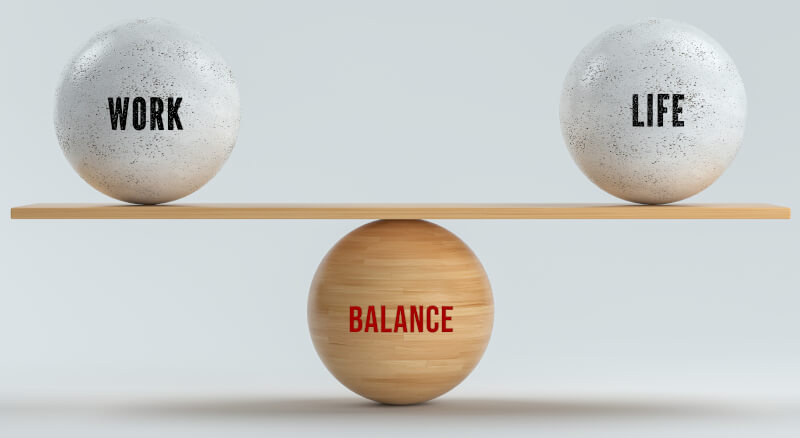
Here’s what the data actually shows: Every decision to give involves a balance between emotional motivation and rational confidence. The strongest donor journeys activate both.
Truly motivated donors don’t just feel moved by a story. They believe that this organization, with its values and track record, is the right vehicle for their investment.
No emotional narrative, no initial spark. No credible brand identity, no reason to follow through. Neither side of this equation is optional. The divide between fundraising and brand could cost nonprofits millions in unrealized potential.
But it isn’t inevitable. There’s a third option: brandraising.
For fundraisers, the hard work of brandraising lies in integrating both disciplinary strengths. The most effective donor communications:
- Still tell emotionally resonant stories, but within a framework of the transparent, competent, outcome-focused attributes the organization’s brand has earned.
- Limit tones of urgency that become hollow with overuse — and in doing so, undermine the brand trust they depend on.
- Use strengths-based messaging to describe those served with dignity and agency — avoiding deficit-based tropes that may drive short-term response but erode brand trust and donor relationships over time — and link giving to the betterment of the broader community.
- Position donors as catalysts for good — not the hero of the narrative but a partner of the organization — making informed decisions about where their resources have the greatest impact and do the most good.
Brandraising requires real collaboration between brand communicators and fundraising creatives. The process, culture and management hurdles are real. So are the outcomes.
John Thompson is principal consultant at JRTCreative Consulting. Over a long career, he has served as an art director, copywriter, creative director, vice president of creative, chief creative officer and chief marketing officer. He also founded and led Direct Design Inc., a creative studio specializing in direct marketing, for 17 years. For more than 40 years, John and his teams have helped hundreds of nonprofits raise millions of dollars through omnichannel direct response marketing. He can be reached at john@jrtcreative.com.
The Role of Texting in Modern Fundraising

Direct response fundraising has always followed the donor. Mail, email, digital and social — each channel earned its place not by replacing what came before, but by meeting donors where they already were. Texting is doing the same thing, and it’s doing it faster than most organizations are ready for.
This isn’t about adding another tool to the stack. It’s about recognizing that the smartphone has become the primary destination for donor attention. Nonprofits that understand that (and communicate accordingly) are seeing stronger engagement, better response rates and donors who feel genuinely connected to the mission.
Why Donors Respond to Texting
A text message arrives in the same stream where donors manage their lives — family, work, plans, priorities. When a message is timely and relevant, it doesn’t feel like an interruption. It feels like a nudge from someone who knows them. That’s the difference between texting done well and texting done at volume.
One donor, after receiving a confirmation text following a fundraising event, replied with a note that she had been thinking about giving again — and the message arrived at exactly the right moment. That reply is evidence of a relationship that had been building quietly, waiting for the right touch at the right time.
Texting works because it reduces friction and creates rhythm. Donors don’t have to search for the email, dig through the mail stack or remember what they meant to do. The message meets them. That simplicity drives action in a way that longer formats can’t always replicate.

Texting Strengthens Direct Mail
Mail earns its place because it carries narrative weight. It gives organizations the space to tell a story that builds identity and inspires action. Texting doesn’t replace that — it amplifies it.
When donors know an appeal is coming, they pay more attention when it arrives. When a follow-up message reinforces the ask a week after delivery, donors feel oriented rather than forgotten. One nonprofit running a two-touch text sequence — a message before and after the mail dropped — saw meaningful improvement in response consistency, particularly among donors who had been giving irregularly. The mail didn’t change. The context around it did.
Digital Channels Benefit From Texting
Email still does important work in cultivation and storytelling. The challenge is that donors receive more messages than they can meaningfully engage with. A well-timed text after a key email isn’t redundant, but a signal that this one matters.
The same logic applies to digital campaigns. When a match deadline is approaching or a rapid response moment requires urgency, texting raises the stakes in a way that respects the donor’s attention rather than competing for it. It keeps donors aligned with the rhythm of the campaign when distraction is the default.
The emotional depth comes from the storytelling happening elsewhere. Texting makes sure donors don’t miss the moment.
Events and Rapid Response
Events run on energy. Texting supports that energy surrounding the logistics, the day-of engagement and the follow-up moment when a donor is still feeling connected but hasn’t yet acted on it.
Rapid response fundraising is where texting’s speed becomes a genuine strategic advantage. When a situation requires immediate support, donors respond to messages that help them understand the need quickly and act without friction. The emotional depth comes from the storytelling happening elsewhere. Texting makes sure donors don’t miss the moment.
Where This Is Heading
The most effective fundraising programs aren’t choosing among channels. They’re building ecosystems where each channel does what it does best, and texting is increasingly the connective tissue that holds the donor experience together.
What makes texting durable isn’t the technology. It’s the principle underneath it: Donors respond to communication that feels human, well-timed and worth their attention. The smartphone is where that communication lives now.
Bart Lillie has three decades of experience in nonprofit storytelling, analytics and partnerships. From volunteer with a Colorado-based nonprofit to vice president of a leading fundraising agency, Bart has been a dynamic advocate for organizations tackling big challenges. He is currently vice president of partner engagement at Synergy.
Realizing the True Value of Sustainer Giving

For the last three years, I have been leading the WAMU advancement team. While a lifelong public media user, this is my first professional tour in the sector. As a fundraiser and marketer, I have always been a little envious of public media’s on-air fundraising drives, where monthly giving was always heavily and successfully promoted to increase financial support.
As a donor/listener/fundraiser, however, I have felt less inspired by some of the messaging organizations use to encourage monthly giving, including sentiments like:
- Give monthly today, and we’ll stop emailing you.
- Give $5 a month — it’s less than a cup of your favorite fancy coffee.
- And my all-time least favorite: We all pay monthly cellphone bills and other subscriptions. Why not do the same for [insert charity name here]!
Sustainer giving has always been hard to categorize and to manage as part of a robust fundraising program. It’s easier to focus on conversion, the set-it-and-forget-it mentality — perhaps embraced more by the organization than the donor journey — and this has resulted in an important population being valued solely for the transactional result, missing the additional opportunity they represent.
People don’t become monthly donors out of guilt or duty. They choose to support an organization because their values align with your mission. Giving monthly is just the way they choose to implement their generosity.
When a person clicks a donate button in an email or on a website, they are choosing to start a journey with your organization. They’ve read your appeal and reviewed your website, financials and impact statistics. Clicking is the final step.
We know as digital fundraisers that we want to make the act of giving as frictionless as possible. As nonprofit fundraisers, we want to compare ourselves to similar organizations or causes. But our donors, the users of our digital platforms, are comparing the ease of use on our sites to what they encounter on Amazon, Walmart or any other major shopping app and website. Make giving simple as they make it to shop. Use technology that facilitates giving and reduces friction. Offer a fully functional digital wallet and eliminate the logistics of how to pay.

Ask for monthly gifts: Your tools should make it easy to choose this option. Recognizing sustainers as a unique cohort of individuals deeply vested in your mission is the first step toward building a lasting relationship.
Set up tailored communications. It’s important too that each message to sustainers feels like a gift from you. As devoted supporters of your mission, they will appreciate behind-the-scenes access to your programs. This can be as simple as a photograph or video showing the impact of programs along with a note from program staff. Length is trumped by heart, and these types of communications are inexpensive to produce and result in deeper loyalty to your mission.
Be creative. Find new ways to share success and communicate developing needs. Additional appeals and asks should be key components of any sustainer communication plan.
At WAMU, we have successful sustainer outreach encouraging planned giving, vehicle donations and gifts through donor-advised funds and individual retirement account distributions. Most recently, we have been testing surveys as engagement tools. Public media wouldn’t be public media without premiums, and WAMU has had great success offering unique sustainer-only items, giveaways and coupons to our online store.
Review your data. The opportunities it holds will surprise you. Reviewing data to determine trends and opportunities is an important task for successful fundraising and marketing. The abundance of AI tools makes this task easier to accomplish.
Following a recent review of sustainer data at WAMU, we identified a group of 3,500 donors who have been giving every month for more than 75 consecutive months. The lifetime value of this amazing and generous cohort exceeds $5 million. Now the team is energized by the opportunity of how to better engage, recognize and uplift this committed sustainer group.
The fundamental principles of fundraising are constant regardless of how much or how a donor chooses to give. How we internally segment, prioritize and label matters less than the joy we enable. When the donors feel seen by your organization, their probability of increasing engagement and financial support grows.
Leslie VanSant has served in leadership roles in support of fundraising, communication and strategy at nonprofit organizations for more than 30 years. She has worked in the arts, humanitarian services, disaster relief, conservation and public media, raising both awareness and funds essential to mission delivery. With a focus on putting the donor at the heart of mission delivery, she has transformed teams to achieve goals and elevate giving.
MAXI Corner: Gold Award Spotlights
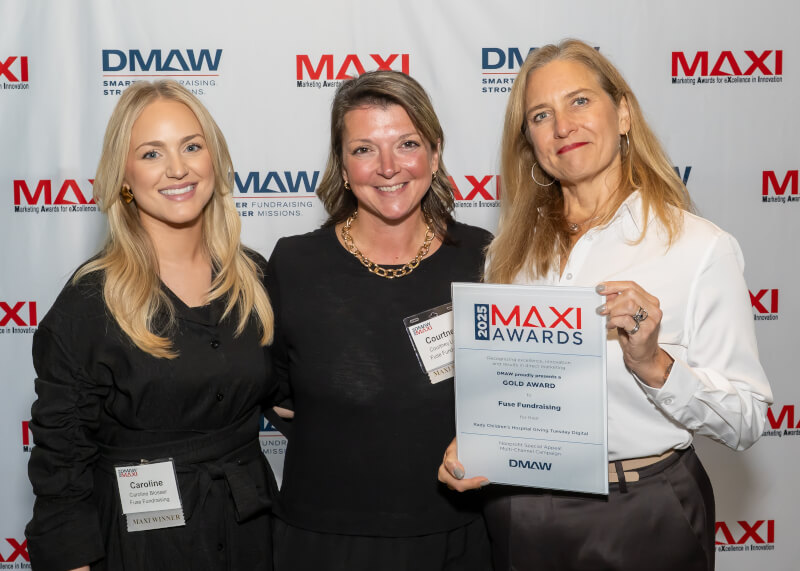
This year’s MAXI Gold winners demonstrate how focused strategy and smart channel execution can drive measurable fundraising gains. Across campaigns, the common thread is disciplined use of targeting, timing and message to increase both response and revenue while staying grounded in mission.
Rady Children’s Hospital Giving Tuesday Campaign
Rady Children’s Hospital built a high-performing Giving Tuesday Campaign around match-driven urgency and coordinated multichannel execution. The campaign combined a two-times match, patient-centered storytelling and expanded touch points across email, paid social media, digital advertising and direct mail, including early and extended giving windows that kept momentum high before and after the day itself. In addition to engaging existing donors, the campaign incorporated third-party targeting to reach prospective supporters and retargeted high-intent users who had previously interacted with fundraising content. It generated more than $54,000 in email revenue (up 33% year over year), increased average gift to $339 (an increase of $63 over the previous year) and improved return on ad spend by 90% while reducing overall spending.
White House Historical Association Multichannel Renewal Series
The White House Historical Association used its 2024 Multichannel Renewal Series to balance revenue goals with reinforcing membership value. Centered on the 2024 White House Christmas Ornament honoring President Jimmy Carter and new benefits like early access to The People’s House: A White House Experience, the campaign tied incentives directly to mission. A coordinated mix of direct mail, email, paid Meta advertising and a homepage, supported by segmentation based on giving history and engagement, created urgency around renewal and ornament availability. Revenue increased by 28% (nearly $252,000) and gifts of $500 or more rose by 85%, underscoring the power of combining data-driven targeting with mission-rooted storytelling.
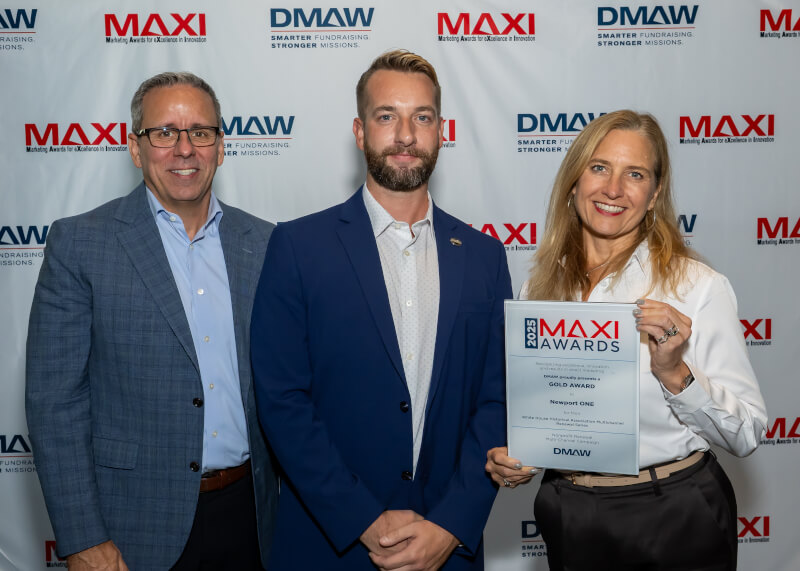
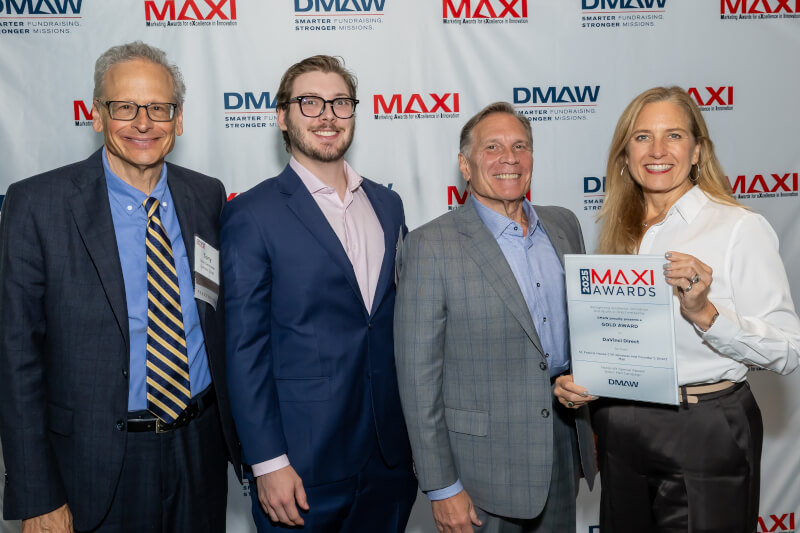
St. Francis House Year-End Renewal and Matching Gift Campaign
Sometimes the biggest gains in fundraising don’t come from adding more mailings — they come from sending the right message to the right audience. St. Francis House improved its Year-End Renewal and Matching Gift Campaign by tightening audience targeting and strengthening overall performance. The nonprofit included more emotionally driven copy and design elements while refining the audience to donors who had given within the previous 36 months. The result was an 11% increase in gross revenue, a 17% lift in net revenue and a 19% gain in net revenue per donor, demonstrating how smarter segmentation and clearer stories can make existing mailings work harder.
Why Leadership Infrastructure is the Next Great Direct Response Strategy


In the direct response and nonprofit marketing world, we are obsessed with systems. We meticulously map out multichannel donor journeys, build predictive data models, optimize direct mail schedules and segment email lists down to the decimal point. We know that data-driven consistency, not luck, drives revenue and scales impact.
Yet, when it comes to the people running those very systems, many organizations rely on a completely unscientific approach: the luck of the draw.
It is a common scenario across our sector. A rockstar direct response specialist consistently hits their revenue targets, masters complex data tools and demonstrates profound commitment to the mission. Naturally, we do the logical thing: We promote them. We say, “Congratulations,” hand them a new title and then, effectively, offer our condolences. Because most of the time, we expect their technical expertise and passion for the cause to magically translate into an innate ability to manage people, resolve conflicts and guide departmental budgets.
“In the short term, people can fake it — but in the long term, people management matters more than anything,” a nonprofit leader told us.
We call this the “accidental manager” phenomenon, and new research proves it is a quiet crisis threatening organizational sustainability.
The Quantitative Reality of the Readiness Gap
To understand the scope of this challenge, the team at Partners on Purpose conducted original research with nonprofit people-managers and executives. The resulting “2026 Nonprofit Management Readiness Report” revealed a staggering reality: 77% of new nonprofit managers feel fundamentally unprepared and unsupported in their leadership roles.
While 95% of leaders agree that supervisory capability directly dictates an organization’s ability to achieve its strategic goals, we routinely leave that capability to chance. This has turned nonprofit leadership into a lottery model. If an employee happens to get a naturally gifted supervisor, they thrive. If they get a manager who is actively winging it without a map, the team descends into crisis mode.
For direct marketing and fundraising departments, the stakes of this leadership lottery are incredibly high. Our work requires precision and tight timelines. When management is poor, the consequences are severe:
The 60% failure rate: The research shows that 60% of new nonprofit people managers fail within their first 24 months due to a lack of clear organizational infrastructure.
High-cost talent drain: People leave managers, not missions. With seven in 10 nonprofit professionals admitting they are considering a new job this year, according to the Social Impact Staff Retention Project, unprepared leadership partnered with burnout have become primary drivers of the sector’s expensive turnover problem. When a tenured data manager or stellar direct response director leaves, campaign timelines may stall, donor stewardship drops and institutional knowledge vanishes.
Chronic firefighting: Without management systems, crisis mode becomes the default setting, leaving teams without capacity for long-term strategic growth or innovation.
“I was promoted and suddenly writing performance improvement plans with no idea how to do it,” a nonprofit manager told us. “I felt I couldn’t ask for help because I was supposed to be the expert now.”
While 95% of leaders agree that supervisory capability directly dictates an organization’s ability to achieve its strategic goals, we routinely leave that capability to chance. This has turned nonprofit leadership into a lottery model.
Why Online Training Isn’t the Answer
When organizations recognize this gap, their default response is often to purchase a subscription to an online learning library. However, the data shows this approach falls short. While 49% of organizations offer self-paced online courses, they are rated as effective by only 33% of managers. Much of what exists is generic, and most training series don’t touch on the realities of nonprofit work like burnout, unrealistic fundraising growth goals, emotional labor and mission delivery fatigue.
“Don’t give me generic 101 content,” another nonprofit manager told us. “Give me a workshop on how to build a quarterly plan or manage up.”
Supervising humans cannot be learned effectively via a solo video module. In fact, 100% of managers surveyed ranked live training paired with direct, real-time feedback as the gold standard for professional development. Furthermore, managers identified giving/receiving feedback, building trust and resolving conflicts as the top three critical skill gaps stalling their success.
The Solution: The Management on Purpose Framework
To close this gap, we must stop treating management as a vague soft skill or an inherent personality trait. Management is a distinct operational skill. Just as you wouldn’t launch a direct mail campaign without a production schedule, you shouldn’t run a team without a repeatable leadership infrastructure.
The Management on Purpose Framework shifts organizations from personality-dependent leadership to proactive and process-dependent success by introducing three core organizational rituals:
- The Pulse (Proactive, Consistent Support): High-performing teams eliminate reactive firefighting by establishing standardized, 20-minute weekly tactical syncs. These are not your standard one-on-ones. The goal of these is establishing a predictable rhythm to shift the manager’s role from check-in dependent micromanager to blocker-remover, ensuring projects stay on schedule before a crisis occurs.
- The Calibration Habit (Real-Time Feedback): The legacy annual review stores up months of feedback into a single, high-pressure, sometimes unexpected conversation. The framework replaces this with a habit of micro-feedback conversations in the moment, allowing managers to correct course and validate strong performers in real time. This approach will enable managers to proactively build growth plans that align individual goals with team and organizational objectives.
- The Knowledge Share (Protecting Infrastructure): Institutional memory shouldn’t live exclusively in one person’s head. Replace the friction of gatekept answers with an open, accessible team intel and infrastructure base. By turning individual expertise into shared organizational resources, teams protect institutional memory and empower employees to work autonomously without micromanagement.
Systems Keep the Passion Alive
The nonprofit sector is fueled by passion, but it is sustained by systems. If we want our direct marketing campaigns to scale and our fundraising pipelines to remain resilient, we must give our leaders the same structural support we give our data.
By moving past the luck of the draw and installing proactive management standards, we stop the cycle of burnout and build organizations capable of sustaining long-term impact.
To download the full copy of the research and explore how to implement these leadership systems within your team, visit partners-on-purpose.com.
Katy Jordan and Brenna Holmes cofounded Partners On Purpose because they believe management shouldn’t feel like a constant state of crisis. They help teams move beyond survival mode by building and implementing leadership structures designed specifically for the nonprofit sector. Their research-backed framework addresses the hidden risks of burnout and resource strain, giving your managers the clarity and confidence they need to lead with purpose. Contact them at hello@partners-on-purpose.com.
When Sustainer Growth Becomes a Stress Test: Data and Retention Challenges We Can’t Ignore

Over the past year, many organizations have experienced real growth in their sustaining donor programs. For some, that growth came steadily. For others, it showed up very quickly — sometimes faster than teams were ready for.
At a high level, the trend is encouraging. Sustainers continue to play an increasingly important role in long-term revenue. During the DMAW Sustainer Day panel discussion, I shared updated Epiphany Benchmarking cohort data through February 2026, showing that roughly one in five donors now participates in a sustainer program and that recurring gifts are driving a growing share of total revenue. More new donors are choosing recurring options upfront, and average monthly gift amounts continue to rise.
At the same time, many organizations, including those represented on this panel, have been actively shifting toward a recurring-by-default approach in their online donation experiences. In that sense, some of this growth is the result of intentional strategy.
But that’s only part of the story.
Every organization on the panel also experienced a noticeable bump in sustainer acquisition over the past 12 months, tied to external conditions such as political shifts, economic uncertainty and moments that prompted donors to act quickly. What we’re seeing now is not just the outcome of better optimization, but the convergence of strategy and circumstance.
As the panel made clear, growth at this scale doesn’t just validate what’s working, it exposes what isn’t. Many of these newer donors gave in response to urgency. They made fast, values-driven decisions to act. That gap between urgency and longevity is now showing up in very real ways.
The Surge Is a Stress Test
Across organizations, the past 12 to 24 months brought what many would describe as a “surge” in sustainers. While some of that growth can be attributed to deliberate shifts like recurring-first donation flows, the scale and speed of the increase were not entirely planned.
Regardless of the cause, the experience was similar. Growth revealed pressure points that had previously been easier to manage or overlook. Systems that were good enough began to strain under increased volume, and processes that worked at one scale became harder to sustain at another. Teams had to adapt in real time.
Alicia Meulensteen, director of nationwide membership at the ACLU, captured this dynamic well during the discussion, noting that the growth didn’t break anything new.
“It just showed us where things needed additional attention,” she said. “When you start to scale quickly, all the places that were a little manual or a little fragile become very real, very fast.”
That sentiment resonated throughout the panel, particularly among organizations managing a rapid influx of new sustainers while facing existing operational constraints. This is where the distinction between growth and readiness becomes important. A program can scale quickly without being structurally prepared to support that growth over time. When that happens, the pressure doesn’t disappear — it simply shifts, often surfacing later in retention, reporting or donor-experience challenges.
Retention Is a System
If the surge tested acquisition strategies, it placed even greater pressure on retention. The benchmarking data reinforces what many teams are already experiencing firsthand. Thirteen-month sustainer retention is approximately 52%, while new one-time donor retention is significantly lower and declining, though these numbers vary by organization.
What became clear in the discussion is that retention is often framed too narrowly. It is not simply the result of a well-timed email or stewardship touch point. Instead, the full donor experience — from acquisition through payment processing, data management and ongoing engagement — shapes retention.
Panelists pointed to familiar challenges: fragmented data, inconsistent attribution, and operational handoffs that introduce friction. Payment processing also surfaced as a quiet but meaningful issue, with failed transactions representing a source of lost revenue that often goes unseen.
In many cases, organizations were scaling faster than their systems allowed. The result was not a single failure, but a series of small breakdowns that collectively impacted retention.
“Retention doesn’t live in one place,” Emily Courville, senior managing director of analytics at Humane World for Animals, said. “It’s not just messaging or stewardship — it’s how the whole system works together, from what the donor hears from you to whether their payment actually goes through.”
That idea surfaced repeatedly throughout the conversation, reinforcing that no single fix can address what is fundamentally a system-level challenge.
That system-level view also requires better visibility. Stephanie Soriano, senior vice president of analytics at MissionWired, emphasized the importance of having a core set of reporting in place, not just for hindsight, but as what she described as “weather reports” for your sustainer program.
“You need to be able to see what’s changing as it’s happening — whether that’s declines, failed payments or early retention signals — so you can respond before it becomes a bigger problem,” she said.
Without consistent visibility into performance across acquisition, activation, payment success and early retention signals, it becomes difficult to identify issues before they become losses. Simply put, you can’t manage what you aren’t measuring.
For donors who entered during moments of urgency, these gaps become even more consequential. Their initial decision to give was driven by immediacy and emotion. Retention depends on consistency, clarity and a sense of ongoing connection — elements that cannot be added after the fact.
Rethinking Loyalty
As organizations work to stabilize and grow their sustainer programs, many are revisiting long-held assumptions about donor loyalty. One of the most common ideas is that sustainers should be approached with caution, particularly regarding additional requests or increased communication.
This instinct is understandable. When sustainers represent a significant and predictable revenue stream, there is a natural tendency to avoid actions that might disrupt that stability. Over time, this has led to what some described as a kind of “protective silence.”
However, the discussion challenged whether that approach still reflects how donors behave today. There is growing evidence that sustainers are not necessarily fragile. In many cases, they are among the most engaged and committed supporters an organization has.
“We’ve treated sustainers like they’ll break if we touch them — but they’re often the ones most ready to do more,” Leslie VanSant, chief advancement officer at WAMU, said. “They’ve already raised their hand and said they care, so the question is how we build on that, not how we avoid it.”
That perspective opens the door to a more active and intentional approach to engagement.
This shift raises important questions about how sustainers fit into the broader donor journey. When does it make sense to deepen the relationship? How should messaging evolve for newer sustainers versus long-term supporters? And how do sustainer strategies intersect with mid-level giving?
Moving Forward
If one idea grounded the entire conversation, it was this: The surge did not create new challenges within sustainer programs — it made existing ones more visible.
For many organizations, that insight has been uncomfortable, but it has also been clarifying. It has highlighted where systems need strengthening, where assumptions need revisiting and where greater intentionality is required.
Urgency can bring donors through the door — what happens next determines whether they stay.
Derek Drockelman is the vice president of sales and marketing at ROI Solutions.

Our industry’s next generation of leaders are already making an impact! Learn more and join them at
dmaw.org/ydmaw.
Why Small Optimizations Matter in Direct Marketing
One of the first lessons young professionals learn in direct marketing is that success rarely comes from dramatic changes. More often, it comes from small, disciplined improvements that compound over time.
A recent fundraising campaign offered a strong example of this principle through optimizing the ask string, presented to donors in a direct mail package. The optimization was done via a co-op partner with the goal being to generate more donors for the nonprofit.
At first glance, changing suggested giving amounts may seem minor compared to redesigning a campaign or rewriting an entire fundraising appeal. But in direct response marketing, even subtle adjustments can influence donor behavior in measurable ways.
The campaign compared a traditional control package against a version that used optimized ask amounts tailored to encourage stronger participation. The co-op partner identified donors likely to give a slightly lower amount based on their giving history within the database. The results reinforced an important reality for marketers: Improving response rates can be just as valuable as increasing average order size or donation value.
The optimized campaign generated a higher response rate, meaning more people chose to give. While the average donation was lower, the campaign ultimately operated more efficiently overall. In direct marketing, that balance matters. A campaign that motivates more people to respond can create stronger long-term value, especially in donor acquisition programs where future retention and lifetime giving are critical.l
This is one of the most misunderstood concepts among newer marketers. Many people focus immediately on revenue totals or average gift size because those numbers appear more impressive on the surface. But experienced direct marketers know that efficiency metrics often tell the real story.
Metrics like response rate, revenue per thousand mailed and cost per dollar raised provide a deeper understanding of campaign performance. They reveal whether a marketing strategy is scalable, sustainable and capable of improving over time.
The campaign also demonstrated the power of incremental gains. The increase in response rate was not massive in percentage terms, but direct marketing operates at scale. When campaigns reach tens of thousands or even a million households, small lifts can translate into substantial financial impact.
This is why testing culture is so important in fundraising and direct response environments. Successful organizations rarely assume they already know the best approach. Instead, they continuously experiment with variables such as donation ask amounts, personalization, copy tone, audience segmentation, package design, timing and frequency.
Each test may only improve results slightly, but over time those gains compound into significant operational advantages.
For young professionals entering the field, this mindset is essential. Direct marketing is both creative and analytical. Strong campaigns require persuasive storytelling, but they also depend on disciplined measurement and optimization.
Another important takeaway from this campaign is the role of donor psychology. Donors respond differently depending on how choices are presented to them. An ask amount that feels attainable can encourage participation, while one that feels too ambitious may discourage action entirely.
Understanding that balance is part art and part science. It requires marketers to think carefully about audience behavior rather than relying solely on instinct.
The broader lesson is that effective direct marketing is rarely about finding one perfect idea. More often, success comes from building systems that allow continuous learning and improvement.
Marketers sometimes expect breakthroughs to come from bold redesigns or highly visible creative changes. In reality, some of the most valuable improvements happen quietly in the background through testing frameworks, data analysis and optimization strategies that steadily improve efficiency over time.
That discipline is what separates strong direct marketing programs from average ones.
In today’s environment, where acquisition costs continue to rise and audience attention is increasingly fragmented, organizations cannot afford to ignore small performance improvements. Every percentage point matters. Every optimization matters.
And sometimes, changing a few numbers on a donation form can produce insights that reshape an entire fundraising strategy.
Apryl Castelluccio is the executive vice president of operations at Key Acquisition Partners. Contact Apryl at acastelluccio@keyacquisition.com.
MEMBER SPOTLIGHT

Vice President of Client Services
K2D Strategies
larchut@k2dstrategies.com
Lori Archut’s path into direct marketing started in New Jersey politics, where she worked on communications for state legislators and a county health department before heading to Washington, D.C., for a seasonal job with a consulting firm producing persuasion mail for Democratic candidates nationwide. What was meant to be a short stint turned into four years, as she discovered that the detail-oriented production side of campaigns suited her strengths. When she was ready to leave the campaign world, she moved to Production Solutions.
“The rest is history,” Lori, who graduated from Temple University with a bachelor’s degree in journalism, public relations and advertising, said.
Over nearly a decade at Production Solutions, Lori learned everything from USPS rules to the mechanics of inkjet versus laser printing to the importance of getting personalization right — experience that would anchor her career in direct response. She then spent time at Chapman Cubine Allen + Hussey (now part of MissionWired) and ABD Direct before joining K2D Strategies, where she is now vice president of client services. What keeps her in the sector is a combination of people and purpose
“I love, love, love that my work makes the world a better place and I love how kind, friendly and genuine folks in the nonprofit fundraising industry are.”
Who do you consider your mentors?
Karin Kirchoff, Peter Maaseide, Courtney Lewis.
What advice would you offer a novice who wants to move up in direct marketing?
Build strong relationships everywhere and anywhere, and always act with personal integrity. This is an industry of relationships, filled with people who want to help each other.
What is the most helpful step you took to advance your direct marketing career?
I spent almost 10 years at Production Solutions, where I worked with many different clients and participated in lots of internal projects and initiatives. When I knew I needed to do something new, it was very hard step to take but I had to trust my gut — and it worked out!
Tell us about your volunteer experiences with DMAW.
I’ve judged MAXIs for a number of years, but my favorite way to volunteer is as a greeter at the Bridge Conference! It’s a great way to learn where everything is at the conference and to see lots of people that you might not get to see otherwise!
Describe yourself in three words.
Determined, talkative, kind.
Describe your life in six words.
Jersey soul, Virginia life, love wins.
QUICK TAKES
 FILM: "Steel Magnolias"
 RESTAURANT: Celtic House, Ruthie’s All Day
 MUSIC: Madonna, Dave Matthews, Oasis, Mumford & Sons, Indigo Girls
 QUOTE: Don’t cry because it’s over. Smile because it happened.” -Dr. Seuss
Direct Impact is the member exclusive magazine from the DMAW, login to read the full issue and access the archives. Not a member yet? Join today to get every issue and more!
